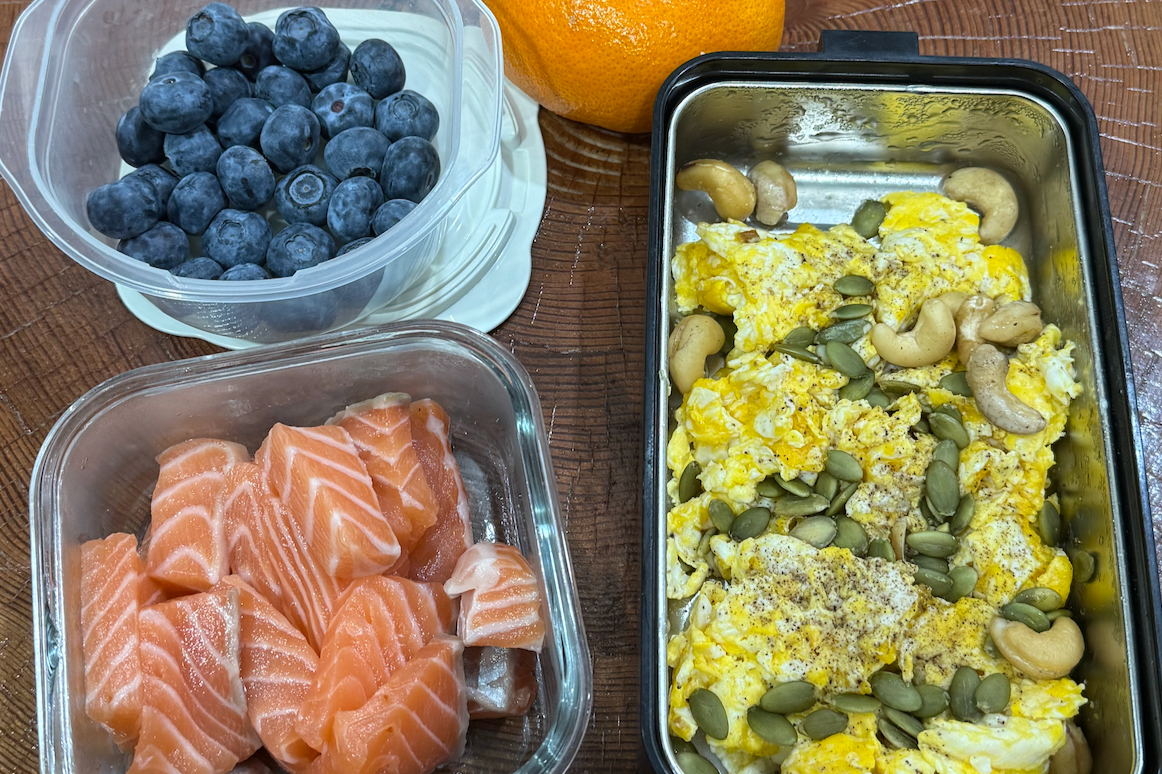
We Are Not What We Eat, but What We Assimilate
We are not what we eat, but what we assimilate. I heard this phrase last week and, in an instant, it encrypted within itself a whole accumulation of emotions, experiences and thoughts I had been having lately. In fact, the reflection that had been circling in my mind was literally this: of everything that enters us, how much do we truly absorb? And with this question I wasn't thinking only of ordinary food, but also of food of a more subtle order.
We are not what we eat, but what we assimilate. I heard this phrase last week and, in an instant, it encrypted within itself a whole accumulation of emotions, experiences and thoughts I had been having lately. In fact, the reflection that had been circling in my mind was literally this: of everything that enters us, how much do we truly absorb? And with this question I wasn't thinking only of ordinary food, but also of food of a more subtle order.
We live in an age where "scientism" has become the new religion, and this often makes us dismiss everything that cannot be measured, quantified or replicated. We tend to fall into the dogma of "this isn't scientifically proven," to the point of denying the experience of other people and, in some cases, even our own. Because there are many phenomena that, although not replicable, are real: phenomena of individual experience, in which the individual is precisely unique. Waiting for science to confirm what is often an intuition can set us back, on average, fifty years. Perhaps I'll speak about this in detail in a future blog.
Almost liturgically, we count calories, hours of study, hours of training. And don't misunderstand me: doing so isn't wrong —putting in the hours is necessary—. But I believe that way of measuring has become very superficial. Because it places all the attention on what enters, and none on what happens inside us, on what we can actually assimilate from all that input.
In football, for example, a player can train for two hours in a typical session. And yet, often out of those two hours he assimilates barely fifteen minutes. The rest passes him by: the body was present, but assimilation didn't occur. So, from that training, did he integrate two hours or fifteen minutes? The paradox is such that often, in order to distill those fifteen minutes, one must prepare a two-hour session. Just as the level of one's being determines the level of understanding, the same happens with the assimilation of everything that enters us.
We are not necessarily what we eat, but rather we are what we assimilate.
And once you look at life through this lens, the law of "finding unity in diversity" makes the examples begin to reveal themselves in everyday events that, at first glance, bear no relation to one another. Because it turns out we don't feed on one thing alone.

“The building material matters as much as the quality of the workers' labor”.
Three foods
There is an ancient teaching that always struck me as fascinating: the human being is nourished by three distinct foods, each more subtle than the last.
The first is food. The densest, the most obvious. Without it we can live for weeks.
The second is air. More subtle, and far more urgent: without it we last barely minutes.
The third —and here is where it gets interesting— are impressions. Everything that enters through the senses: what we see, what we hear, what we perceive of the world and of the people around us. It is the most subtle of the three foods. And also the most neglected, because we receive it completely automatically, without realizing that it is feeding us —or poisoning us— at every instant. Without it, we cannot live even a second.
With all three, the same holds as with food: they don't nourish by the mere fact of entering. They nourish according to how we digest them.
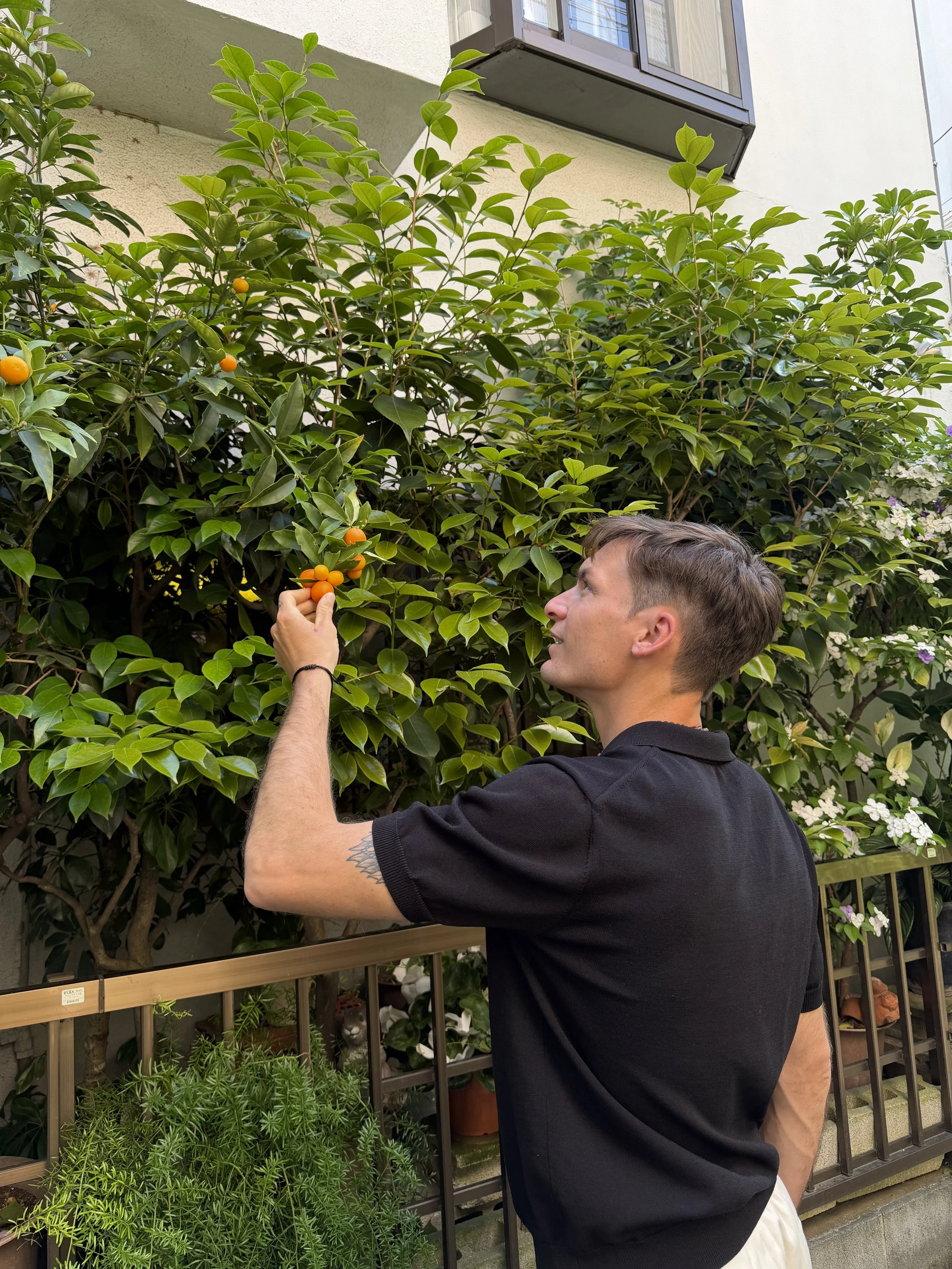
A tree I came across in the middle of Tokyo. The impression I felt was the force of life manifesting itself through its fruits.
Back to the first food
Let's return for a moment to food, because I learned this one in my own flesh. For a time I believed it was enough to eat well —the right ingredients, the right quality—. But the body can receive good food and still not assimilate it, if the conditions aren't there: if one eats in a rush, in tension, without rest, without the right frequency. Real nutrition is not what enters through the mouth. It is what the body manages to transform into living matter. By this I don't mean you shouldn't nourish yourself with real food: the building material matters as much as the quality of the workers' labor.
If this is true for the densest, imagine for the most subtle.
Impressions: the invisible food
Here I want us to pause, because this is the most important point, and the one that tends to escape the untrained eye.
We are receiving impressions all the time. A conversation, a screen, a gesture, a landscape, someone else's emotion. At first they enter without permission and in enormous quantities. And because they enter on their own, we believe they require nothing of us. There lies the error. Under unconsciousness —that famous "airplane mode" we often slip into, especially in adult life, and out of which it is truly difficult to climb once one becomes aware of it— most of those impressions are simply lost. Or worse: they pile up undigested.
Children are the clearest example. They receive impressions with a force we have already lost —which doesn't mean we can't recover it; work upon oneself is also a kind of training and, as such, requires conscious efforts on our part—. They receive them that way mainly because their personality has not yet become flesh, or is in its early stages of gestation, which means they possess fewer filters; and because they have little time of life, which amounts to little time of experiences that would allow them to discern, compare, evaluate. That's why almost all the negative emotions one sees in a child are not their own: they are learned through imitation. A great part of negative emotions are, at bottom, acquired (on this last point, dear reader, it will be good for you to reflect on your own).
They absorbed an impression and made it flesh, without knowing it. As adults, parents and educators, this should give us pause: what we emit in front of a child becomes their food. Regardless of what we say, if we don't embody our own words, it is very likely our influence will be poor and weak. One must become coherence, for these small beings are great detectors of coherence and incoherence (and, having said this, note that from children we can learn, and learn a great deal).
There are also impressions we never manage to digest. They stay stuck. On a subtle level at first; and if one doesn't listen to oneself, that energy begins to materialize until it expresses itself in the body. Because the body is always speaking to us.
Here I speak from my own experience: in a myofascial release session, as the physical tension in my legs let go, memories began to surface —matches, rejections, old pains; I even came to feel like crying. Those —as I interpret it today— were impressions that at the time I couldn't assimilate or release, and that the body had stored in the form of pain, waiting patiently for me to look at them.
That's why I believe the symptom is not something to switch off. It is a call to look at oneself. The pain that asks for attention is not an enemy: it is an undigested impression that asks, at last, to be assimilated and released. If one does not listen to the voice of the soul, in many cases the soul sickens the body and takes it out of the flesh (this is as far as I am allowed to reveal).
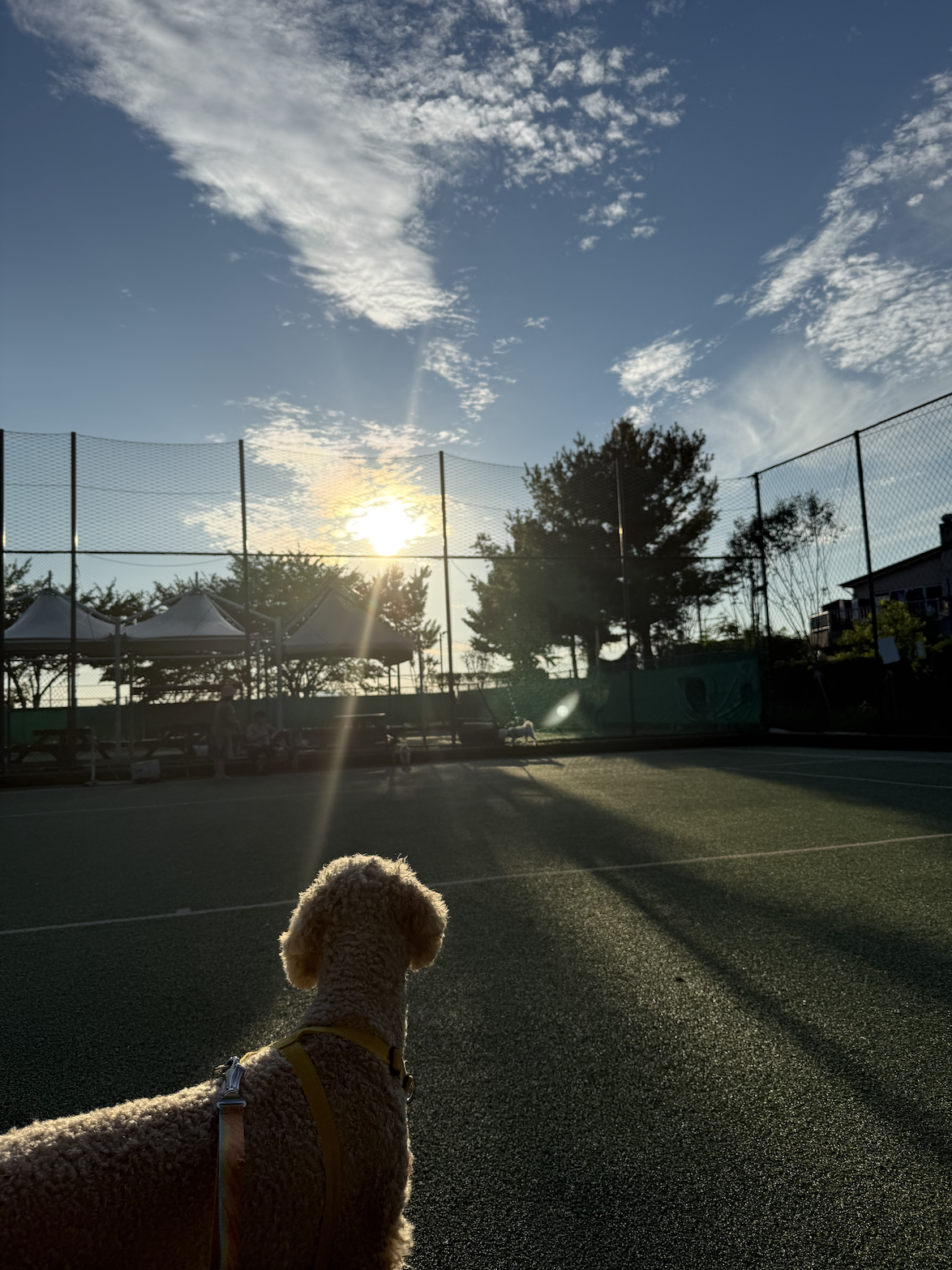
I leave it to you, dear reader, to interpret the impression I received in this moment.
To train is to digest
Here the circle closes with football, and with life.
To train is not to accumulate. To train is to digest. The value is not in the amount of tactical information a player receives, but in what he manages to transform into body, into gesture, into decision under pressure. And this digestion is often slow, subject to the law of processes: it's about beginning to assimilate little by little so that, in time, one becomes able to accumulate nutrients of an ever higher level, and also to assimilate greater quantities. An ever more subtle assimilation.
The same with life. It's not about how much you read, how much you see, how much you live. It's about how much one manages to assimilate and integrate so that transformation may occur; so that the alchemy of oneself may transform ordinary metal into gold.
The price of assimilating
And how does one assimilate consciously? Here I connect with something I shared in the previous blog: by becoming simpler. As simple as one can be, and as necessary; no more than that. Reducing the noise. Training with small quantities to strengthen ourselves and be able to receive ever more material for absorption. The overload of impressions —the bombardment of screens, stimuli, information— is precisely what prevents assimilation. Simplifying life is not renouncing: it is creating the conditions for what enters to nourish us, for food to become nourishment.
But this has a price, and it isn't me who says so (so please, don't be upset with me). In the ancient teaching I mentioned earlier there is a very interesting idea that, in my case, accompanies me daily: to obtain what one sets out to achieve, one must pay in advance. And that payment consists of sacrificing everything that takes us away from the purpose. Moreover, there are no guarantees: no one assures us we will arrive.
Choosing what we feed on —in food, in air and, above all, in impressions— is perhaps one of the most important decisions we make each day. And for that one must become conscious of oneself, work upon oneself, so that when the moment comes one is able to do. Because, subject to the law of accident, in the illusion that we are doing, we fail to see that in reality things happen to us.
And you? Of everything that entered you today —what you ate, what you saw, what you felt—, how much did you truly assimilate? How much are you able to remember? How much passed you by because you were in "airplane mode"?

The gradient of colors in the sky, and the joy of having been able to perceive it, to receive it.
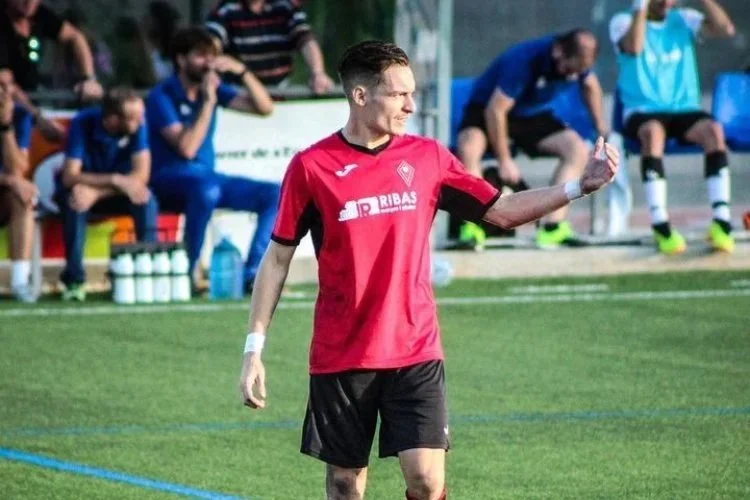
Time to Be Coherent with Simplicity
This phrase "came down" to my mind one afternoon, while I was reflecting on life's cycles — my own in particular. I understand these cycles as chapters that mark our history, each one with its own duration according to the relativity of each particular life.
This phrase "came down" to my mind one afternoon, while I was reflecting on life's cycles — my own in particular. I understand these cycles as chapters that mark our history, each one with its own duration according to the relativity of each particular life. And over time I have become more able to recognize the passages: those periods of migration from one cycle to another, where one crosses a bridge and decides what to carry along and what to leave behind.
I am in one of those crossings now. That is why I find myself making these reflections.
The clarity didn't arrive until just after the World Cup final, where Argentina lost to Spain.
I watched the match at home, with an Argentine friend. And something curious happened to me: although my heart wanted Argentina to win — I was born and raised there, even though Spanish blood also runs through my veins —, during the match I felt more like a spectator than a supporter. I was simply watching an interesting, entertaining match. I was present, without the weight or the tension of needing the team you cheer for to win no matter what.
What made a very strong impression on me came afterward. After the defeat, some players became aggressive. And that image was very hard to watch — not because of them, but because I automatically recognized myself. That contained rage, that way of channeling through football an energy that is fundamentally misplaced but well justified by "passion": that is also mine. I saw myself reflected in the player who caused the disturbances.
Throughout my career, I reacted many times in a controversial or aggressive way, justifying it as "part of living the game." It's passion, I told myself. And inside that word — passion — one hides and even reinforces behaviors one knows are wrong, shielding them with the idea that others, lacking passion, "can't understand it."
But reflecting, when I went to the root, I did not find passion. I found suffering. A suffering lived through the sport, still latent there — a part of me that has not yet had the opportunity to evolve.
And there the contradiction appeared, painful: when I coach my students, I preach that football is only a game, that first you have to enjoy yourself in order to be. I saw the distance between what I teach and what I had been embodying when I take on the role of player. I didn't like it, but I had already seen it — and seeing one's own "miseries" is something that, perhaps out of an instinct to flee from pain, tends to activate certain "evasion mechanisms."
What I am looking for in this new crossing is precisely this: to sacrifice the suffering. That when I play, the game stops being suffering. That it stops being everything I picked up from elsewhere and returns to being simply a game. Resignifying the meaning, rewriting the code of the word game within my practical software (integrating the meaning that is already present in the theoretical part, as it also is in so many other aspects of the "game of life"). And for that, I understand it is necessary to release identification, because if one does not identify with something, one cannot suffer through it.
It was then that the phrase came to my mind: it is time to be coherent with simplicity.
Simplicity and coherence are closely related. To be simple, what one says, does, feels and thinks must be in congruence, without contradictions. It is simplifying the equation. Solving for x. Dissolving, letting go of everything that is left over.
And what I understand is left over now, in my case, is a construct: almost an inherited mandate for being "Argentine" — the garra, playing hard, suffering as a way of loving the game. Predetermined concepts and ideas that gradually impregnated and mixed themselves with my identity and with my way of understanding the game. The recurring question that comes to me is how much of this I truly feel that way, and how much is "inherited." And although I am still trying to answer that question, I felt a deep clarity: I must become simpler, lighter, less burdened… there is weight that is left over. And behind that clarity, another somewhat uncomfortable question arose: at what moment did I decide to complicate things so much?
I believe a part of me complicated things excessively because, deep down, the simple seemed ordinary to me. Of little value. As if something simple could not be worthy of recognition — and there was the real knot: the desire to be recognized.
The ego does not fear failure as much as it fears the simple. Because in the simple there is no one and nothing special to applaud. Complexity provides a place to shine; simplicity asks you to disappear into the game, into the instant, into what is. And for the character we construct, disappearing feels like dying. At least that is how I had understood it until now.
And yet — here is the paradox — it is in simplicity that one truly is. And when one is, without more, one reveals precisely that which makes one unique. To be oneself, to be simple, is what costs the most.
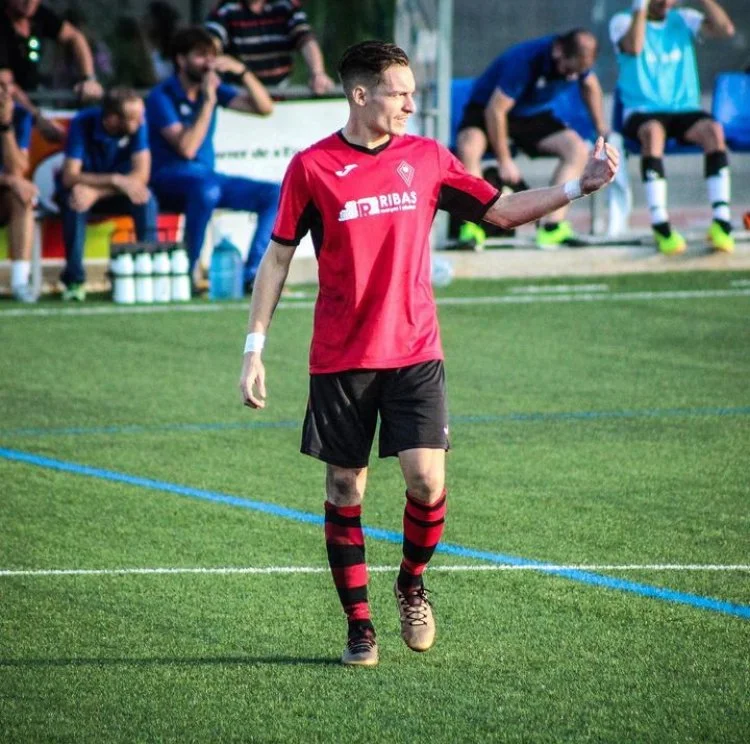
"that part of me which today is shedding everything it doesn't need, so as to return to the simplicity of being who it really is"
Perhaps the problem appears when we take as our own constructs that do not belong to us, covering over our simplicity — our rarity —, altering our essence, diluting its purity. And there is much that gets "impregnated" in us during our "formative stage," which will later condition a great part of all our experiences; at least until we are given the grace to resignify ourselves, creating a "purer" version of who we are. If there is no conscious effort and no work upon oneself, this will not be possible.
Thanks to all this I can now see where to step in order to take one small step further toward "freedom."
To become one is to become simple. And in that simplicity the "combat directed outward" is dismantled: there is no one to fight against, no one to demonstrate or prove anything to — deep down there never was.
So right now, this piece of writing turns into a declaration of principles: I no longer want to fight, but rather to enjoy the experience of being alive; and with that, to open myself to everything that lies beyond the fight, which in my case, until today, was a fight for approval.
I no longer want to wait for recognition in order to be, but rather to simply be, independently of external recognition.
I won't lie to you by saying I already know what this looks like in practice. I am in the middle of the crossing, one foot on each shore. I still have no method, no list of steps. I only have the direction: to become simple, even though becoming simple is not easy at all. I suspect it is trained like everything else — in the small things, in how I react to the events that arise in my day to day, to the next bad match I play, in whether I am capable of playing without needing to prove anything to anyone. I'll tell you what I found there, once I reach the other shore.
What I do know is that in order to change what will happen tomorrow, we have to begin by changing what happens today. Therefore, carrying out this task I have assigned myself requires beginning today, right now.
Also, what I do know is where all of this is pointing. Because at some point along the way I tuned in to a different frequency, one in which everything is as it is, and everything unfolds as it unfolds. A frequency in which there are no errors, because everything is as it has to be.
In that frequency, nothing goes wrong; and I intuit that in order to tune in to that frequency one must become simple, being what one really is, letting go of what one is not. Even what one is not has a function, and that is to remind us of what we are: through what I am not, I can also come closer to what I am.
Just as facets of myself that no longer represent me were revealed to me today in one concrete area, I understand that everything is connected and that this goes beyond football itself. Being able to look at oneself objectively requires effort and courage. Nor are there permanent states, since everything is in constant flow and one is no exception. Staying in the "correct" vibrational frequency requires efforts and also "voluntary sacrifices." The first sacrifice is one's own suffering and, as I wrote before, for that one must stop identifying — knowing that when this happens and is sustained over time, something is going to "die." Perhaps to "reborn" is to resignify our life, inhabiting a much more complete and finished version of ourselves.
They say that in order to be born one must first die, and that in order to die one must first awaken. Perhaps what happened that afternoon, watching those players on the screen, was just that: an instant of awakening. I hope that from this event onward, the identification with what I no longer am dies in me today, giving way to the birth of a more real and permanent individuality. Because life is only real when one is.
And you? What construct are you carrying that isn't yours? What would you have to let go of in order to cross over, lighter, toward who you want to be? Are you willing to pay the price of seeing your own contradictions — and more still, the price of doing something about it?
The map before the journey
In football, before designing any tactic, the first thing I do is observe. I watch the player: how they move, how they react under pressure, what patterns they repeat without realizing it. Without that honest diagnosis, any training plan is generic — not specific.
Life works the same way. You cannot navigate without knowing where you are setting sail from.
Six principles for building a life with intention
In football, before designing any tactic, the first thing I do is observe. I watch the player: how they move, how they react under pressure, what patterns they repeat without realizing it. Without that honest diagnosis, any training plan is generic — not specific.
Life works the same way. You cannot navigate without knowing where you are setting sail from.
What I am about to share here is not a universal system or a method with guarantees. These are principles I have lived — on and off the field — and that I have seen work when applied with honesty. Take them as a tool, not as a dogma.
I
Recognize where you are
Before deciding where to go, you need the courage to see where you actually are. The world around us offers clues — if we are willing to look. And the inward gaze offers a different kind of information: more uncomfortable, but also more valuable.
The starting point is not the same for everyone. Two people can want the same thing and need completely different paths to get there. Any method or tool has value, but only if it is calibrated to the specific situation you are in. The generic map does not exist.
"There is no right route until you know what ground you are standing on."
II
Learn to let go
I have seen players with real talent — and I have felt this in my own skin — held back by what they could not release: a belief about themselves, a deeply rooted habit, the fear of making mistakes. The space occupied by old things is the same space where new things cannot enter; to make room for the new, the old must go.
Letting go is not always something you can achieve alone. Certain layers of yourself can only be reached with the help of someone who already knows that terrain — a teacher, a guide, someone who has walked the path before. Recognizing that some processes require another person is not weakness or incapacity: it is clarity. Seek a method or someone who can guide you in understanding what letting go truly means.
Without exaggerating, a master can save you lifetimes — and strange as it may sound, certain kinds of knowledge can only be transmitted orally, through “living tongues”. This is as far as I am permitted to reveal.
III
Step by step, reach your goals
Large changes that arrive too quickly rarely hold. I have seen that on the field too: the player who tries to transform everything at once and breaks before consolidating anything. The center of gravity is built through constant repetition, not through bursts of willpower.
Setting unrealistic goals can produce exactly the opposite result from what we are looking for. Instead of fixing a distant destination that feels overwhelming, think about how you structure the 24 hours you have each day. That is where the real work lives. Continuity and sustained repetition over time are necessary to embody the version of yourself you are building. Keep in mind that some skills require years of focused attention directed at a single point; you must be willing to pay the price that demands. Here, football offers a clear illustration of a universal principle: correlation is not causation. Every professional footballer trained countless hours during their formative years — yet not everyone who trained countless hours became a professional.
“Everything truly valuable requires payment in advance, and comes with no guarantees."
IV
Write it down
Bringing an idea onto paper — or into an audio recording — is already, in itself, an act of materialization. The difference between a floating thought and a written intention is the same as the difference between a gesture and a real action.
It does not matter if they are simple notes, scattered thoughts, unpolished words. What matters is that the idea begins to take shape outside your head. The process of making it real starts there, in the small. And if you cannot manage the small things, you will not be able to manage the large ones. That is why the small things matter more than they seem. One of the most common traps in the process of materialization is wanting something bigger while resisting the fact that bigger things bring bigger problems to navigate. The small is not a stepping stone you leave behind — it is a test you keep taking at every level.
V
Put it to the test
It is easy to build an image of yourself in stillness. The problem comes when that image is never confronted with reality. The two lines need to cross: what you think you are and what you actually are must converge at the same point. Without testing, we live in the dream world — convinced we are what we imagine, without having proven it even to ourselves.
The test does not have to be a major event. It can simply be an uncomfortable conversation, an honest visualization, a situation that demands you respond from what you claim to be. Exposing yourself to circumstances that reveal whether who you believe you are matches who you really are. After the test, you see clearly; and if the path needs adjusting, you do it with far greater ease. The outcome of the test is valuable feedback — but only if you approach it with a process-oriented mindset. If you focus solely on the result, you risk losing sight of the horizon, regardless of whether that result feels positive or negative from where you currently stand.
VI
Choose wisely where to invest your energy
Not every idea deserves development. In fact, you may come across genuinely good ideas that you will need to say no to, if they do not move you in the direction you want to go. Before committing to something, it is worth pausing to observe where it truly leads if you begin to pour energy into it — not just where you would like it to go, but where it actually goes.
When the intention is clear and aligned with what this world genuinely needs, something shifts. A clear intention, accompanied by aligned thoughts, actions and emotions, will connect you with everything necessary to smooth the path ahead. What is almost always missing is clarity. And, paradoxically, to reach it you must first shed what is excess: what is missing is the space taken up by what does not belong.
“To grasp something new, your hands must first be empty."
Decide right now what you will stop giving your attention to.
CONCLUSION
These six principles are not a formula. They are the kind of questions worth asking before you move. The game — any game — is played better when you know where you stand, when you are able to recognize the time-space you are in, who has the ball, and toward which goal you need to shoot.
At least on this plane of consciousness, space and time are determining variables, and every reality is in close relationship with the time-space of the one observing it. Perhaps that is why the same event is perceived differently by two people: each individual inhabits a different time-space and, with it, a different fragment of the truth. The problem arises when we mistake that fragment for the whole truth.
Drawing closer to objective truth — despite our inevitable subjectivity — may be a direct path of connection with all that is. A connection that, it should be said, always was, always is, and always will be: at a more elevated order of reality, time and space converge in a single point — the eternal present. Good luck on your journey, dear reader.
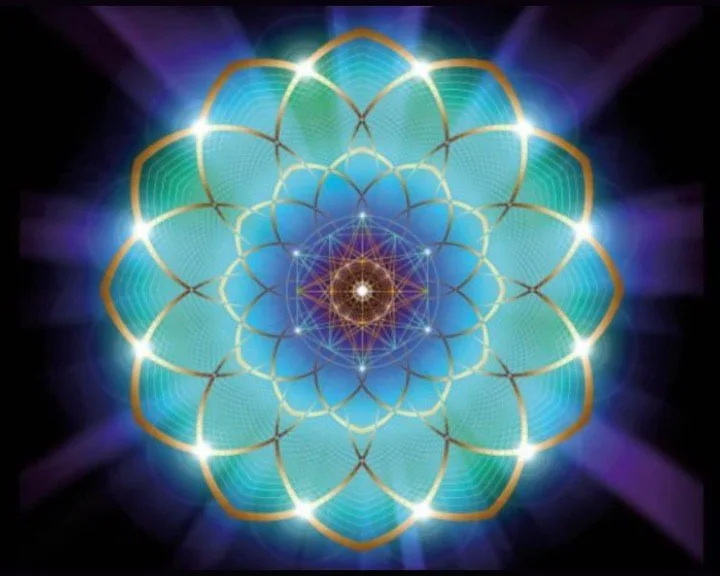
The Flower of Life — an ancient symbol of sacred geometry found across cultures and centuries. A reminder that beneath all apparent complexity, there is pattern. Beneath all separation, there is connection.
the Memory Transforms According to Your Own Development
Our memory is not a fixed file nor a static photo album. It is a living software that updates constantly according to our level of development and awareness.
Our memory is not a fixed file nor a static photo album. It is a living software that updates constantly according to our level of development and awareness.
The memories we hold shape our beliefs, our identity, and the narrative we tell ourselves about who we are. Some are vivid and sharp, others vague and full of gaps. Many of them were recorded during childhood, when our perception was far more intense and we still lacked the emotional and cognitive tools to process them completely.
That is why, without realizing it, we can continue interpreting important events in adult life with childish codes: incomplete, exaggerated, or even traumatic meanings that no longer serve us.
Here is the key: the memory transforms according to your own development.
When we begin a conscious process of reflection and personal growth, we start “updating the software.” We review the old codes, reinterpret past events, and give them new meanings. What once seemed like “the end of the world” can become a simple formative anecdote. What used to generate shame or fear can transform into understanding and gratitude.
This process is like opening the windows of a dark house: as more light enters, we see with greater clarity. The memory is not erased, but it does transform. What changes is not the event itself, but the light with which we look at it.
We are multidimensional beings living a human experience. Although we are limited by a body and linear time, we have access to a broader reality where past, present, and future coexist in an eternal present. From that perspective, we can consciously “travel” to our memories and rewrite their impact.
Part of this work consists of connecting with more evolved versions of ourselves — those that already possess the qualities we now long for — and “downloading” that information into our present. Intuition, sudden insights, and moments of deep clarity are usually the channels for that download.
This conscious modeling of memory is essential if we want to manifest our most complete version here on earth. It is not only about healing the past, but about freeing ourselves to create a different future.
Real Experiences from Private Lessons
A few years ago I worked with a boy who perceived feedback from his parents and from me as a coach as overwhelming pressure. I used the metaphor of the young tree: the sticks tied to the trunk so it grows straight toward the light. At one point during the session, after talking about this, he stopped the ball before shooting at the goal and asked me: “What happens if the rope breaks?” I replied that this would be the best possible sign — it would mean the tree had grown strong enough and no longer needed external help to stay on the right path.
Another student used to have a very harsh and demanding internal dialogue every time he failed. We worked on the idea that every process takes its time and that error is a friend, not an enemy. Little by little he changed his internal dialogue. Today, the memories of his failures no longer torment him: they have become concrete guides for continuous improvement.

Once the teaching “crystallizes” within us, external help will no longer be necessary to continue our “path of ascent toward the light.”
The Connection with Football
In football this is especially powerful. Many players carry painful memories from past matches: a missed penalty, a goal conceded due to an error, or a poor performance. Thanks to current technology we can go back to those moments, see them from another perspective, and reinterpret them. We often discover that what we felt in the heat of the match does not match what actually happened. That new reading transforms the memory and turns “failure” into fuel for the next game.
Many of these memories are also stored in our fascia. I experienced this firsthand during a mentoring session on fascial release. While applying deep pressure on my iliotibial band and relaxing to handle the pain, vivid memories from football matches began to surface: moments when my internal dialogue was destructive, rejections from clubs, and the pain I felt at the time. I saw myself as an external spectator. I also relived moments when my ego had taken complete control and I believed I was the best in the world, even though deep down I knew it was all smoke. Automatically I laughed and asked myself (in my mind, while deeply releasing tension in my legs): “Where were you going with that attitude?” Another part of me immediately answered: “I was coming here.” When I opened my eyes I felt a profound reconciliation with my past and absolute clarity: “There are no design errors in the universe.” Everything had to happen exactly as it did for me to be where I am today.
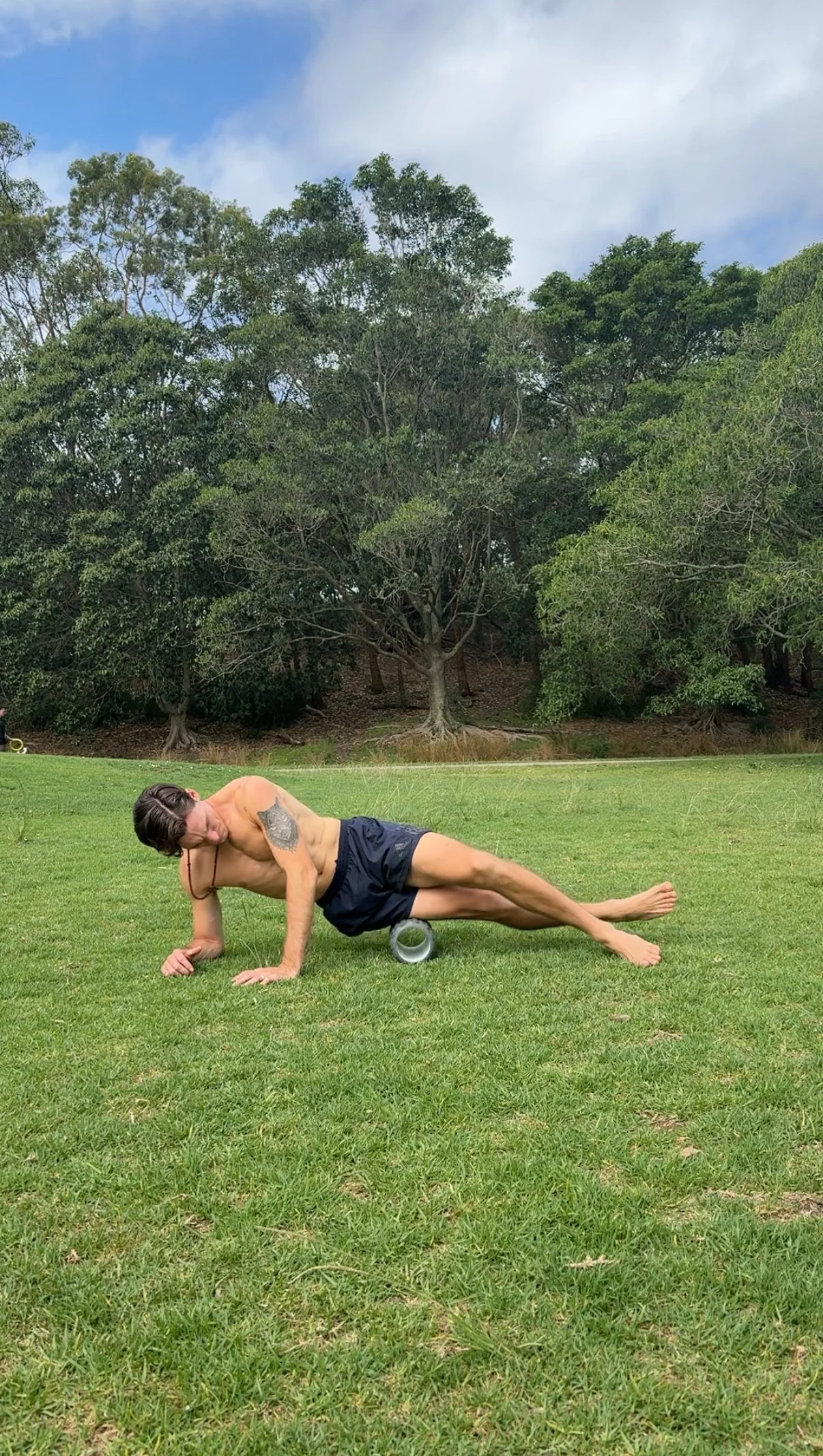
Performing myofascial release on the iliotibial band of my right leg.
Practical Part: How to Update Your Memory
One of the most effective tools I use daily is journaling. Writing on paper (or in the “Journal” app on my phone with attached photos) everything that is spinning in my mind allows me to download information, close open windows, and release mental energy. Since I have been practicing it consistently, the quality of my sleep and my attention span have improved dramatically.
In addition, during free practice with the ball I use powerful visualizations. I imagine that I am not in just any park, but in a stadium full of people cheering. This exercise of imagination helps me change the emotional context of the present moment and train the memory in a deeper and more positive way. I often use this practice while filming my videos.
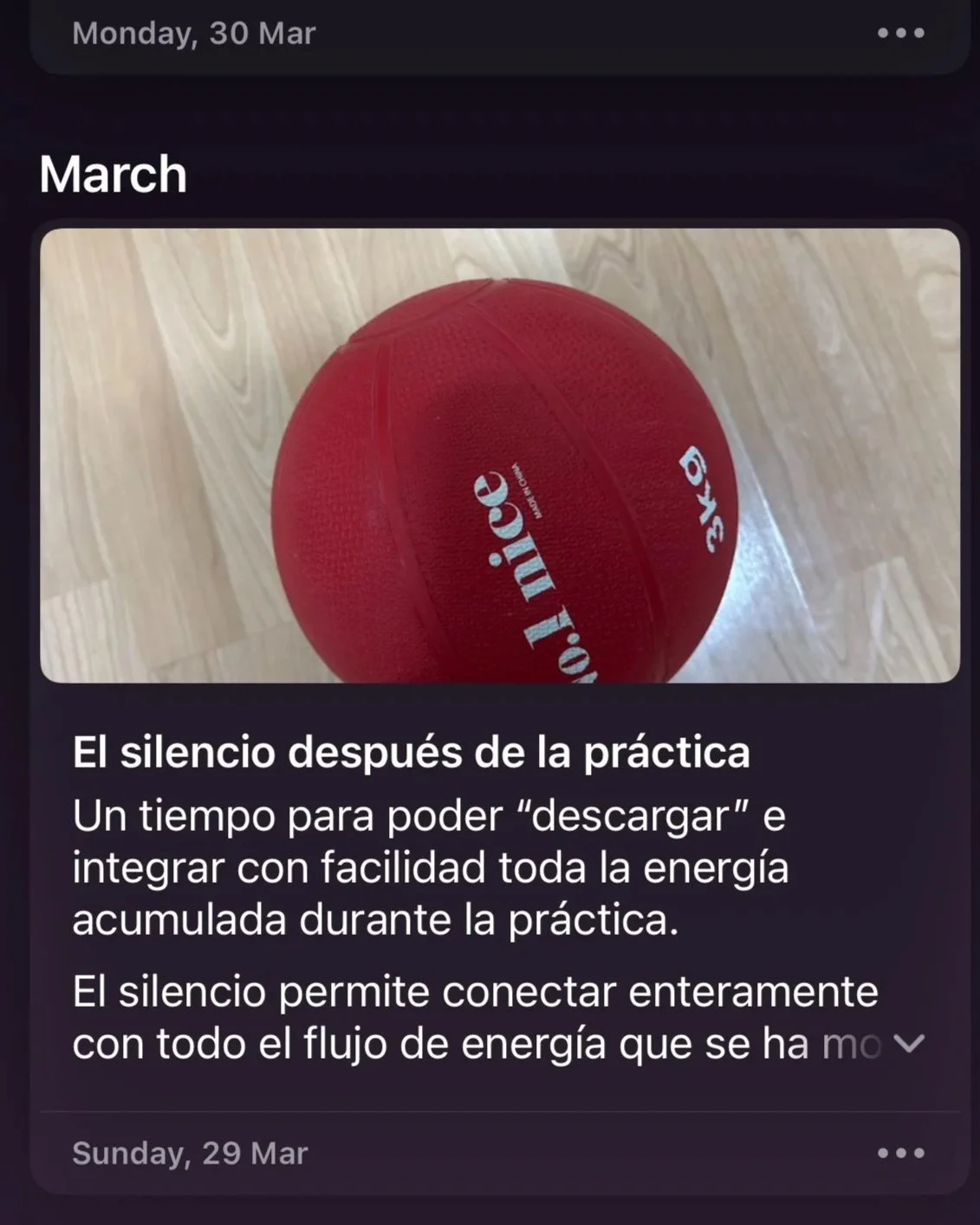
"Journal" app
Closing
As adults, parents, and educators, we carry an enormous responsibility. The impressions we leave on children and young people will outlive us. True immortality is not found in monuments, but in how our teachings and our way of being are “carried” by future generations, just as we today carry what we learned from those who are no longer physically with us.
The memory transforms according to your own development.
And you have the power — and the responsibility — to decide which version of that memory you want to carry with you… and which version you want to transmit.
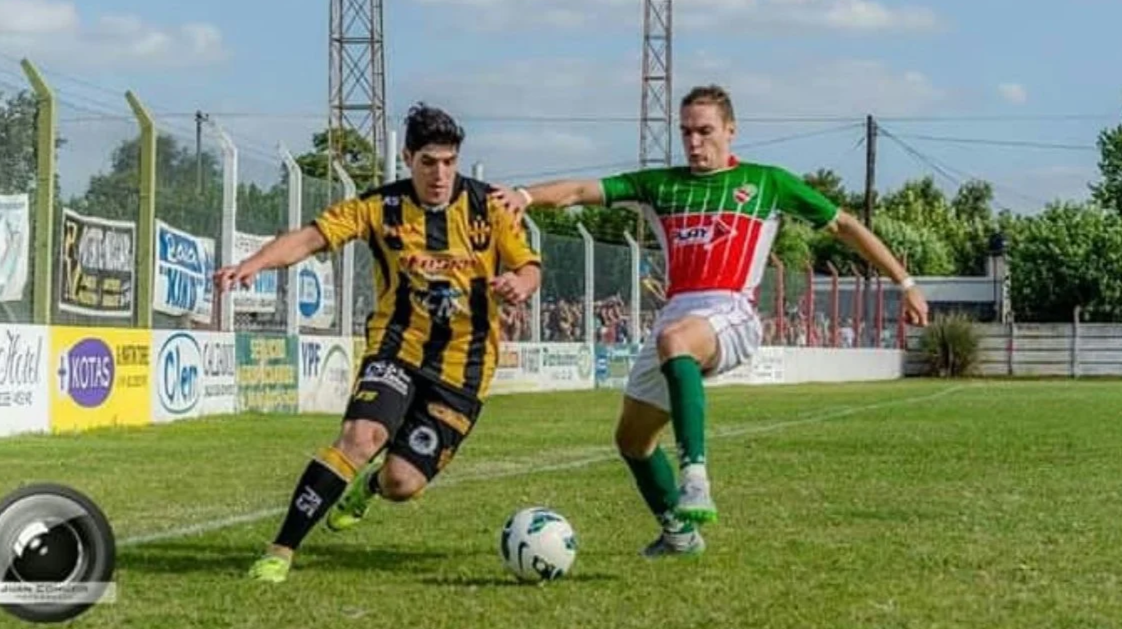
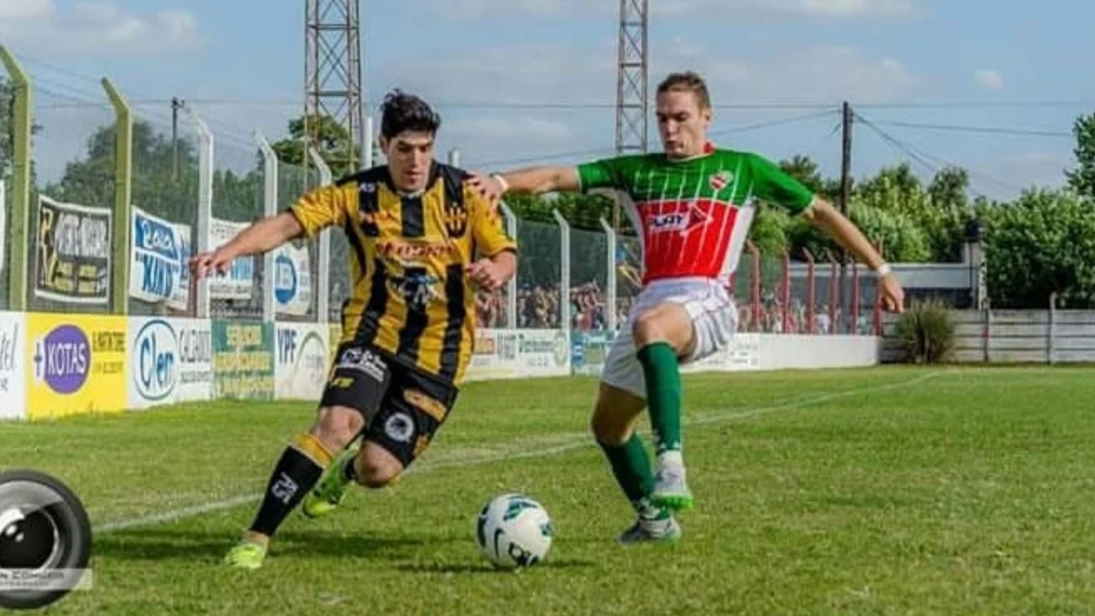
My last steps in Argentine football before moving to Spanish football. “I was coming here; There are no design errors in the universe.”

Your First Home That Will Always Be Your First Home
The first home where we grew up leaves a deep imprint. Sometimes it accompanies us for life.
From the house that has been your first home and will always be your home.
The first home where we grew up leaves a deep imprint. Sometimes it accompanies us for life. Other times, when we awaken, we begin the reconfiguration of the software. That work isn’t done with mere desire: it demands iron discipline and absolute conviction. Because very often we aren’t updating a program from 20 or 30 years; we are cleaning the generational shadow of the entire family tree.
There is no room here for victimhood. You are the update of your ancestors. Your children will be the most advanced version of you.
“No one is given a cross they cannot bear.”
If you are a father or mother: all the inner work you avoid, your children are absorbing it subconsciously. You are passing on the pending task, the unbroken pattern, the un-updated program. This isn’t about alarming anyone, but about informing—because you are and will be both the teacher and the student of your own children. Knowing this, you can choose the teaching-learning method.
So far we have spoken of the plane that, for simplicity, we will call spiritual.
Each being incarnates with a specific mission. Often that mission consists precisely in resolving the unfinished tasks of the family tree into which they chose to be born—partially, and also their own specific mission. Many times, the specific mission cannot be fully carried out without first resolving the tasks left unfinished by our ancestors.
Answering a possible question that may be now in your mind, Yes: we chose the tree before coming. We chose the experience we needed in the physical plane. This is as far as I can reveal; in people who are not yet doing their individual work, this information can destabilize.
To fulfill that mission, the spirit requires a vehicle: the body.
This is the first temple.
This is the first home.
And during this incarnation, it will always be your home.
Probably the most advanced technology that has ever existed on Earth. Thousands of processes occur every second without our conscious intervention. We are born without a manual, and out of ignorance, we end up living in a mansion but occupying only two or three rooms.
The body operates with the exact same code lines as the first home of our upbringing.
If you care for it → you will have a safe home.
If you treat it with love → it will be a pleasant place to inhabit.
If you give it light → there will be no dampness.
If you give it air → life will enter.
If you give it proper nutrition → the walls will be strong.
"When light confronts me head-on, my shadow retreats behind."
But the most decisive factor is how you furnish the attic (your mind).
If you train thoughts of compassion, love, and gratitude, the entire house transforms.
Because the body is a direct reflection of the mind.
The body manifests subtle vibrations that originate in the mind.
In the body, the harvests of what you have been sowing become visible.
The golden rule (I didn’t invent it, I’m just passing it on):
We must aspire to control the mind, not let the mind control us.
Mind and body are instruments in the service of your being and your mission.
The problem arises when the mind believes it has a life of its own.
That is what we call ego.
And here enters the eternal debate: Is the mind bad? Is the ego bad?
No. Both are necessary.
We live in a dual plane where everything is fragmented. The ego takes the cosmic energy allocated to us and separates it from the All to form our individuality. That separation creates the personality. The “person” is the avatar we use in this game, but the person is not us.
Central paradox of the dual plane:
The ego is essential to fulfill our individual mission… and at the same time it must remain connected to Unity, because at the most objective level there is no “I” or “you”: we are all one.
We come fragmented to resolve a particular mission that, paradoxically, affects the totality.
Your inner work impacts everyone, especially those closest to you. Vibrations travel like Wi-Fi signal: the closer to the router, the stronger the reception.
What signal are you emitting today? That should be a daily question.
If you care for your home, it reflects outward. Others may get inspired and start their process… or not. That no longer depends on you. Everyone plays their own game.

"Food and nourishment are not the same thing."
Your work affects:
your children (descendants)
those around you (horizontal)
those who came before (ancestors)
It is multidimensional.
It is no coincidence that all religions ask for “the dead to rest in peace.”
Often, our work precisely unlocks that peace for our ancestors.
And they, in turn, unlocked updates that we enjoy today.
(Parenthesis of gratitude: thank you mom, thank you dad, thank you grandparents).
When the ego forgets that union, we begin to wander. Imbalances appear through excess or deficiency.
Returning to the center is the task.
Returning to you.
Returning to the home that will always be your first home.
And filling it with the highest vibrations: love, joy , peace… enlightenment.
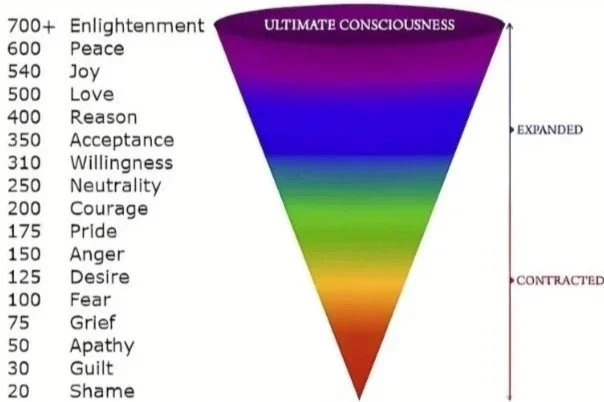
"Vibrational gradient in the spectrum of creation"
I’m Coach Kimnamdo and I’m at your service…
¡VAMOS!
Attention is the Currency of God
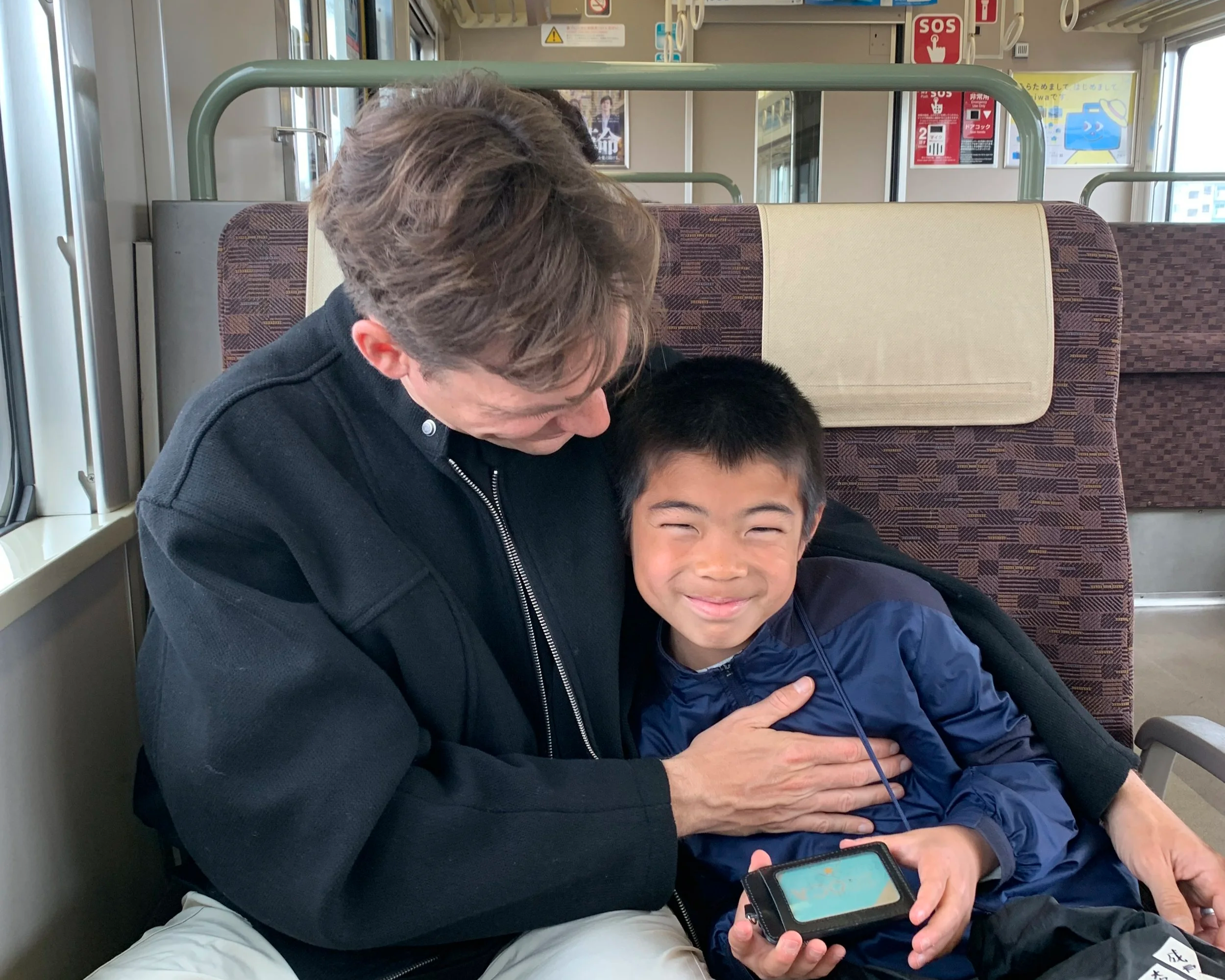
This blog was born from reflections that came up during a trip to Japan, when I went to visit Shoichiro—one of my students—and his family. Being away from my daily routine allowed me to clearly see how much attention we lose on trivial things and how much power we gain when we direct it with purpose. That trip stayed with me all the way back to Seoul, and this phrase became a constant companion: Attention is the currency of God.
This blog was born from reflections that came up during a trip to Japan, when I went to visit Shoichiro—one of my students—and his family. Being away from my daily routine allowed me to clearly see how much attention we lose on trivial things and how much power we gain when we direct it with purpose. That trip stayed with me all the way back to Seoul, and this phrase became a constant companion: Attention is the currency of God.
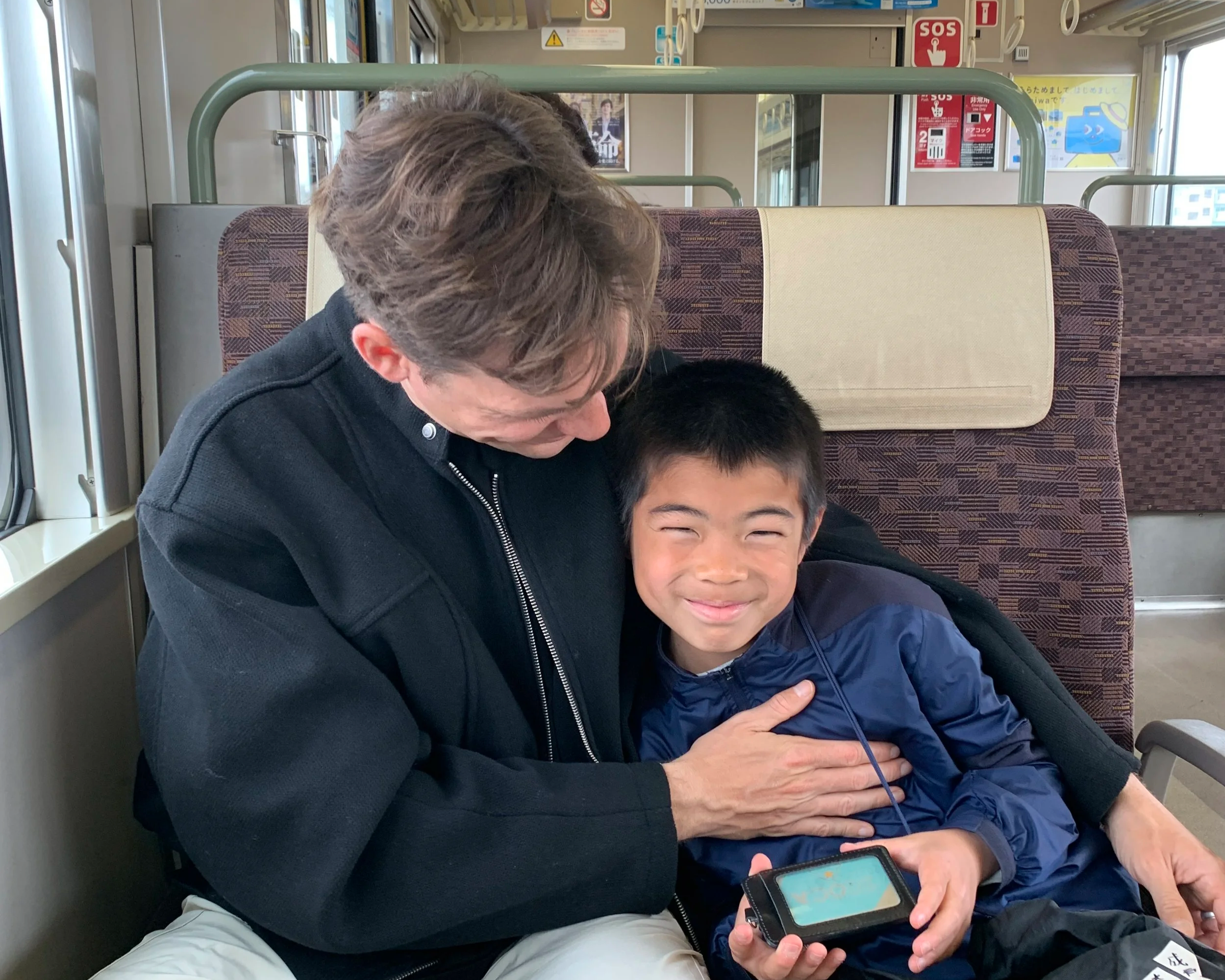
Traveling with Shoichiro on the train, just minutes before our farewell.
So simple, so powerful. It’s not about spending it on fleeting distractions, but investing it in what we truly want to materialize. If we don’t learn to invest our attention, we won’t be able to receive the reality we wish to inhabit.
Attention is a divine tool available to everyone, but today it is being systematically attacked.
Our attention is destroyed day by day. Everything seems designed to fragment it: social media, multitasking, multi-screen life, a constant bombardment of stimuli and noise. How is it possible that we devote more attention to a screen than to ourselves? This paradox is obvious —even now, you’re reading this through a screen— but it reveals a much bigger problem: reduced attention equals less meaning in life.
Attention = meaning = self-knowledge.
A life without meaning lacks direction. Without it, it’s easy to be carried “wherever the wind blows.” And those who create those winds, who rule through division and chaos, know this very well:
Where your attention goes, your energy flows.
Attention = energy.
If you are not aware, you may be putting your life force in a place you didn’t even choose, “feeding someone or something else.”
What doesn’t exist in your world is simply because you’re not looking at it. Your sustained attention is what sustains the particular reality you live in; without that attention, there is no materialization.
When it comes to materializing our attention, our ideas, our desires, it becomes vitally important to understand the following:
If we don’t speak the language of the universe, the universe doesn’t understand us.
Pay attention to this sequence in the creative process that explains what I’m saying in a very simple and concise way:
Attention → vibration → frequency → intuition → commitment → action → materialization.
Notice that many times when we want to change something we understand that we must act differently. However, this is only half true, because action is a consequence of primary causes in the creative process. We can change our actions, but if our attention and vibrational frequency remain the same, we won’t be able to achieve the desired results.
Or more directly:
Attention → desired reality → vibration → frequency → desired reality.
The opposite works the same:
Attention on the undesired → undesired reality → vibration → frequency → undesired reality.
Although it sometimes seems not to be true, we always have the opportunity to choose: what I want or what I don’t want.
We have received the “menu” of life. To order what we desire, we must use our attention, not just our intention.
Attention is more powerful than intention.
The universe registers your attention, not your verbal desire.
Imagine going to a restaurant in a foreign country and pointing to the dish you don’t want, saying “I don’t want this.” What do you think the chef will bring you?
Imagine you want more clients but you constantly think it’s difficult—what will you get?
A person has an average of 60,000 thoughts per day. If most of them are negative or focused on what they don’t want, what reality do you think they are creating?
Through this logical process we can arrive at the following conclusion:
The problem is not that we can’t concentrate; it’s that many times we are not conscious of where we are putting our concentration.
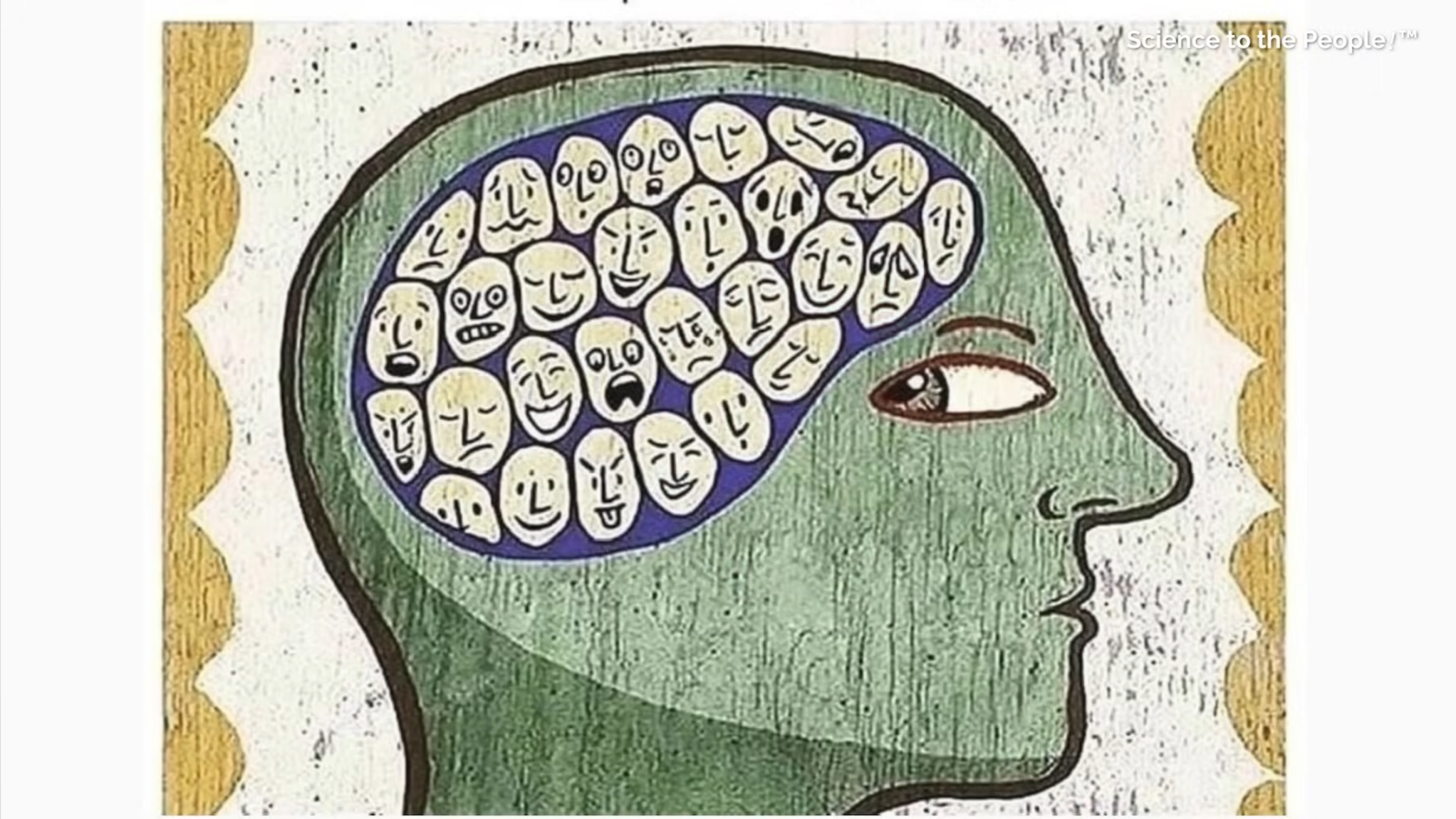
Image illustrating a fragmented mind with scattered attention. This image has been taken from the public and free space "Science to the People" by Mr. Ernesto Prieto Gratacós. I, Fernando Martín Berthet Garayoa, am not affiliated with or endorsed by Ernesto Prieto Gratacós.
You create the rules of your own reality. You are creating them right now, whether you are aware of it or not.
Whatever the thinker thinks, the prover proves.
And just to make it clear: you are the thinker and you are the prover.
“I can’t do it” materializes.
“I can do it” materializes.
Now we must include in the equation something I call “the old frequency or the old you.”
This entity does not want to die and therefore pushes you back with obvious reactions to adversity, with responses that have been deeply rooted in you through years and years of automatism. These immediate reactions are what is known as “traps of the old vibration.”
That is why an initiatory school with Sufi roots speaks of a strange but very powerful practice: do not manifest negative emotions.
Keep in mind that not manifesting negative emotions is different from repressing them. It is about observing those emotions-reactions and containing them within yourself, not letting that energy be wasted.
In the process one can become conscious of how one really is, what “makes one react,” and thereby begin to modify the old frequency through conscious efforts and “voluntary sacrifices.” Keep in mind that the more deeply rooted this reactive program is in you, the greater your conscious efforts must be, because you may discover that you have been reacting this way, let’s say, for the last 20 years and now you must begin the reverse engineering or “deinstallation” of that vibrational programming.
Attention is alignment.
Focusing on the aspect that will create your desired reality is simple: you are the most important person in your own reality. And although it may sound selfish, don’t be deceived by the illusion—if you do not vibrate in your highest frequency, helping others will always have the limitations of the vibrational state you are in. To help others one must start by helping oneself. The process is from the inside out, never the other way around.
If upon reading this you realize that you are not living the reality you truly desire, let me give you good news:
“In every undesired reality is hidden the seed of the desired reality.”
We return to what was explained earlier. The obvious reaction to adversity is the trap that returns you to the previous vibrational state.
To foster our attention we need our concentration:
Concentration = centralization of energy = concentrated energy.
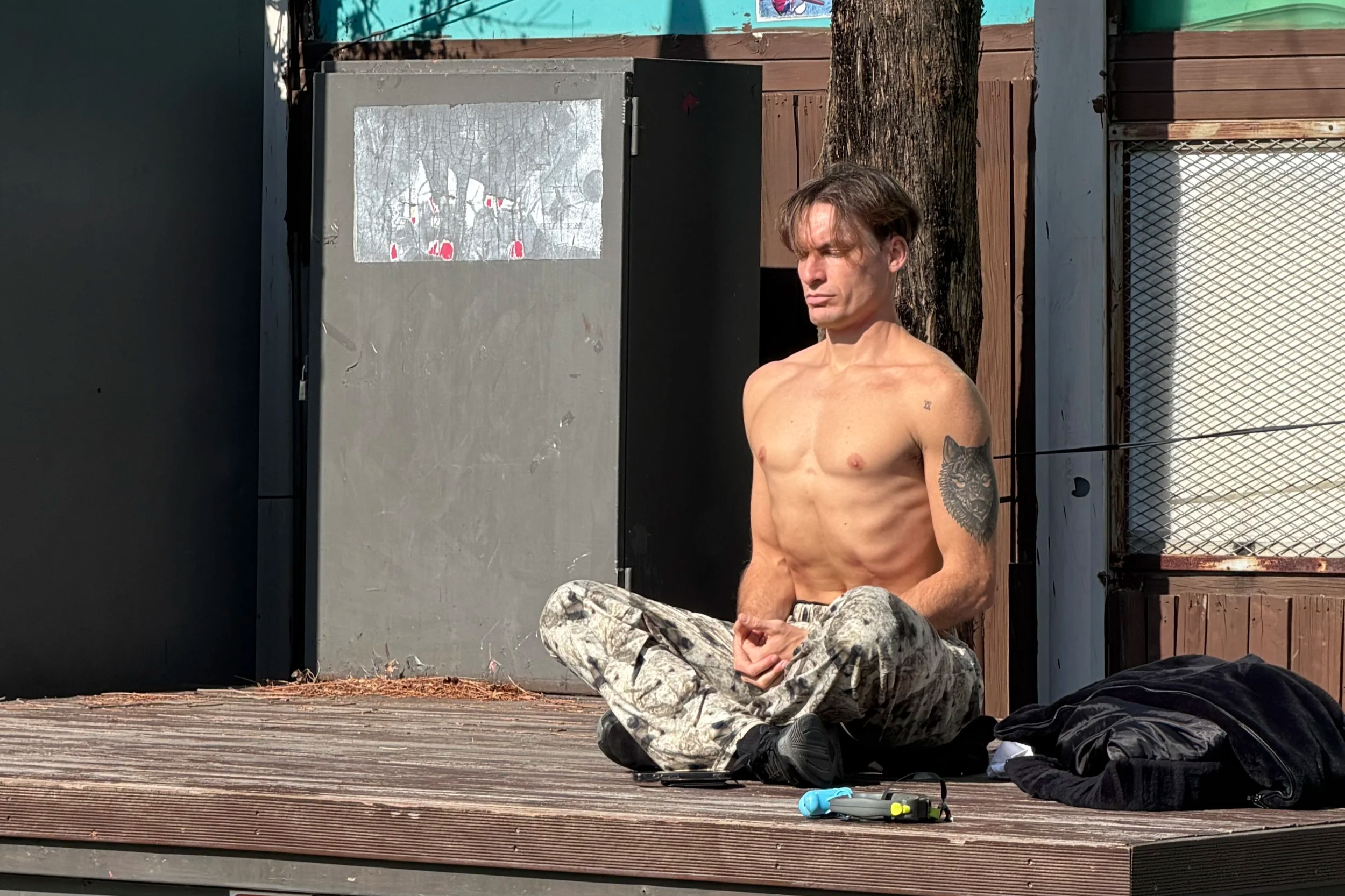
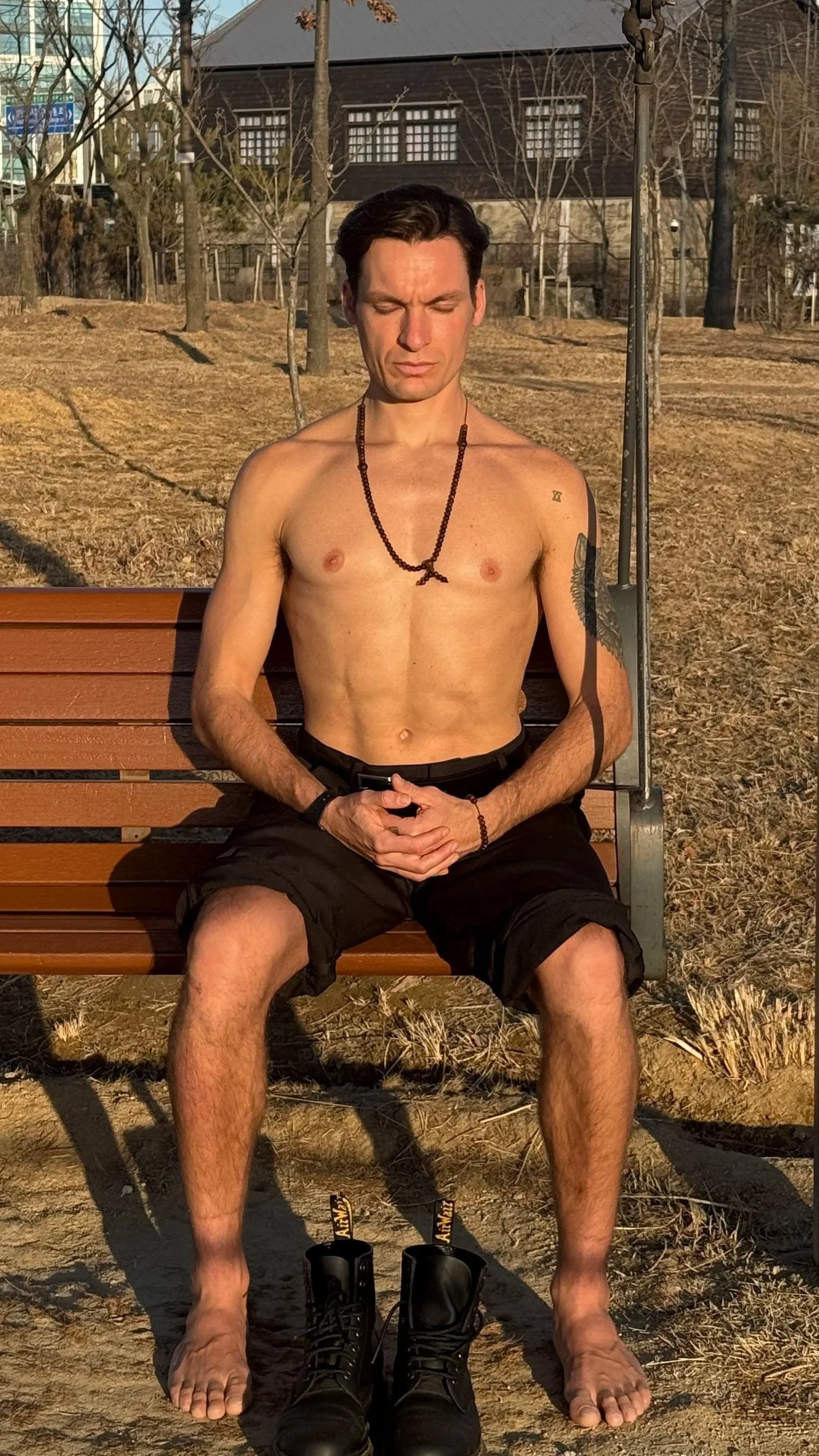
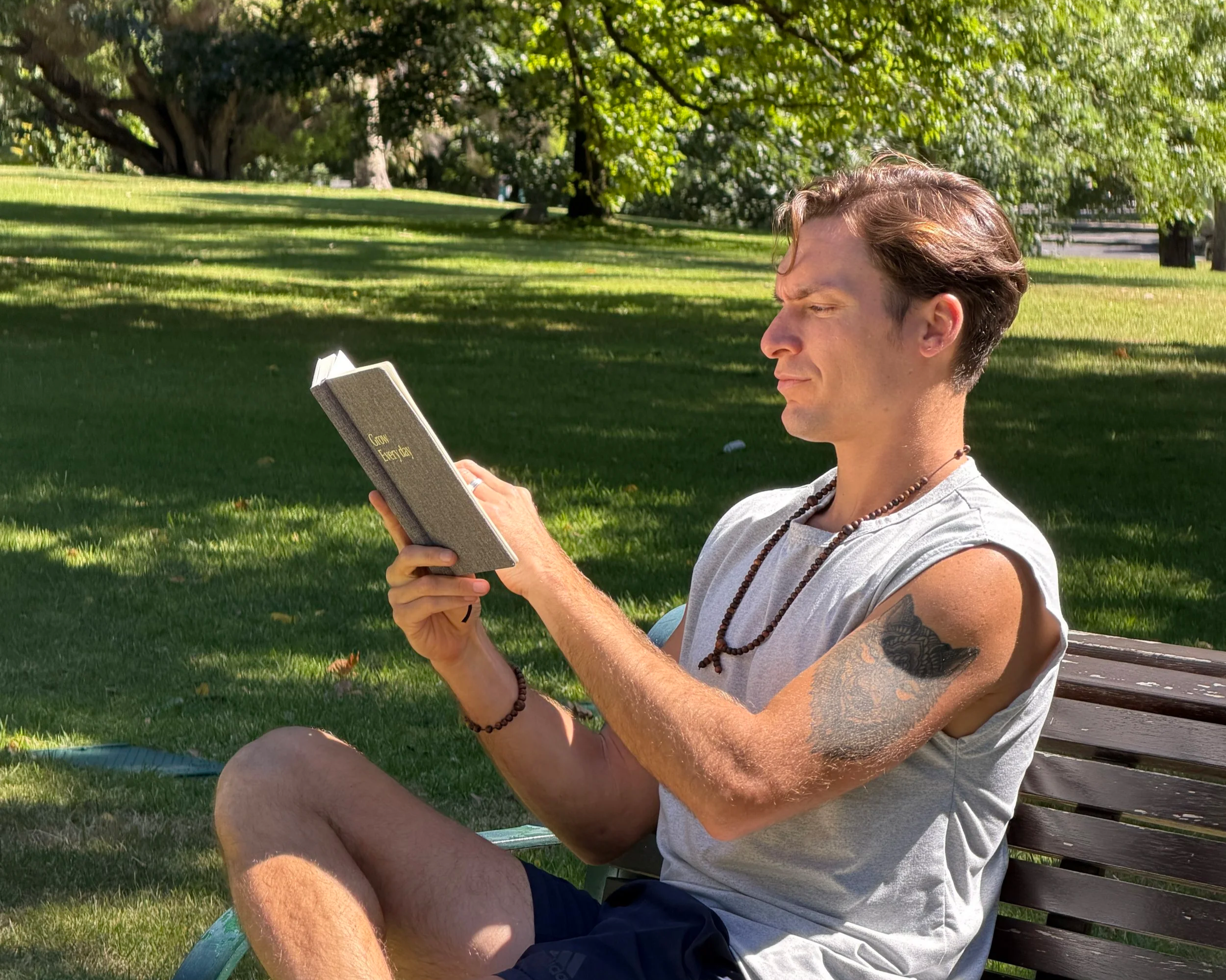
Photo taken by my wife in the park while I was concentrating my attention and at the same time receiving the light of the giver of life, the sun.
I hope it is now easier to understand what I mean when I say that attention is the currency of God.
Where are you investing the currency of God?
Where are you spending your attention?
Let me clarify something very important, because when I speak of God I do not intend to allude to any type of religion and/or intermediary between you and the original source.
God is an impersonal energy, the substance of reality, the highest level of consciousness.
Attention is the primary cause in the chain of materialization.
Choose consciously. Your attention is your power.
“You are gods but you have forgotten.”
It is not about religions. It is not about intermediaries.
We are a fractal of unity, for we are all one.
Within you also resides the living God and with it, the divine capacity of creation.
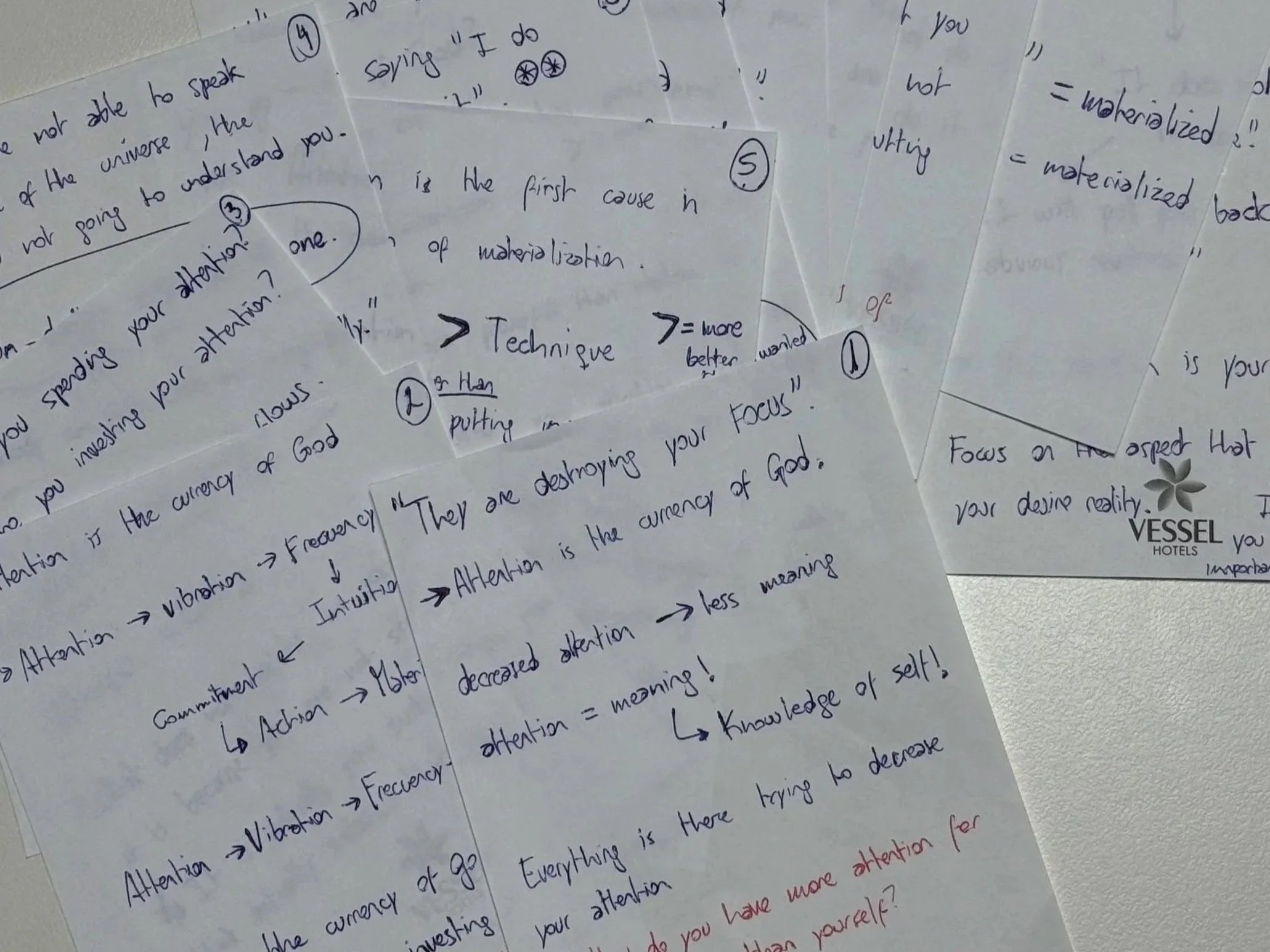
Reflections written on paper during my trip to Japan, which gave birth to this blog.
I’m Coach Kimnamdo and I’m at your service…
¡VAMOS!
The Intuition Reveals Information from the Future
One Sunday morning in Seoul, I prepared early to go teach classes. It had snowed the night before and it was very cold. I packed my usual bag —boots, balls, cones, the book I’m reading— and, purely on intuition, I also took the shovel for clearing snow. From my apartment window the streets looked completely clean, but something told me to bring it anyway.
One Sunday morning in Seoul, I prepared early to go teach classes. It had snowed the night before and it was very cold. I packed my usual bag —boots, balls, cones, the book I’m reading— and, purely on intuition, I also took the shovel for clearing snow. From my apartment window the streets looked completely clean, but something told me to bring it anyway.
When I arrived at the first field, everything was spotless. Not a single flake. I could have been annoyed at carrying extra weight on such a cold day, but it didn’t bother me at all. I simply carried on.
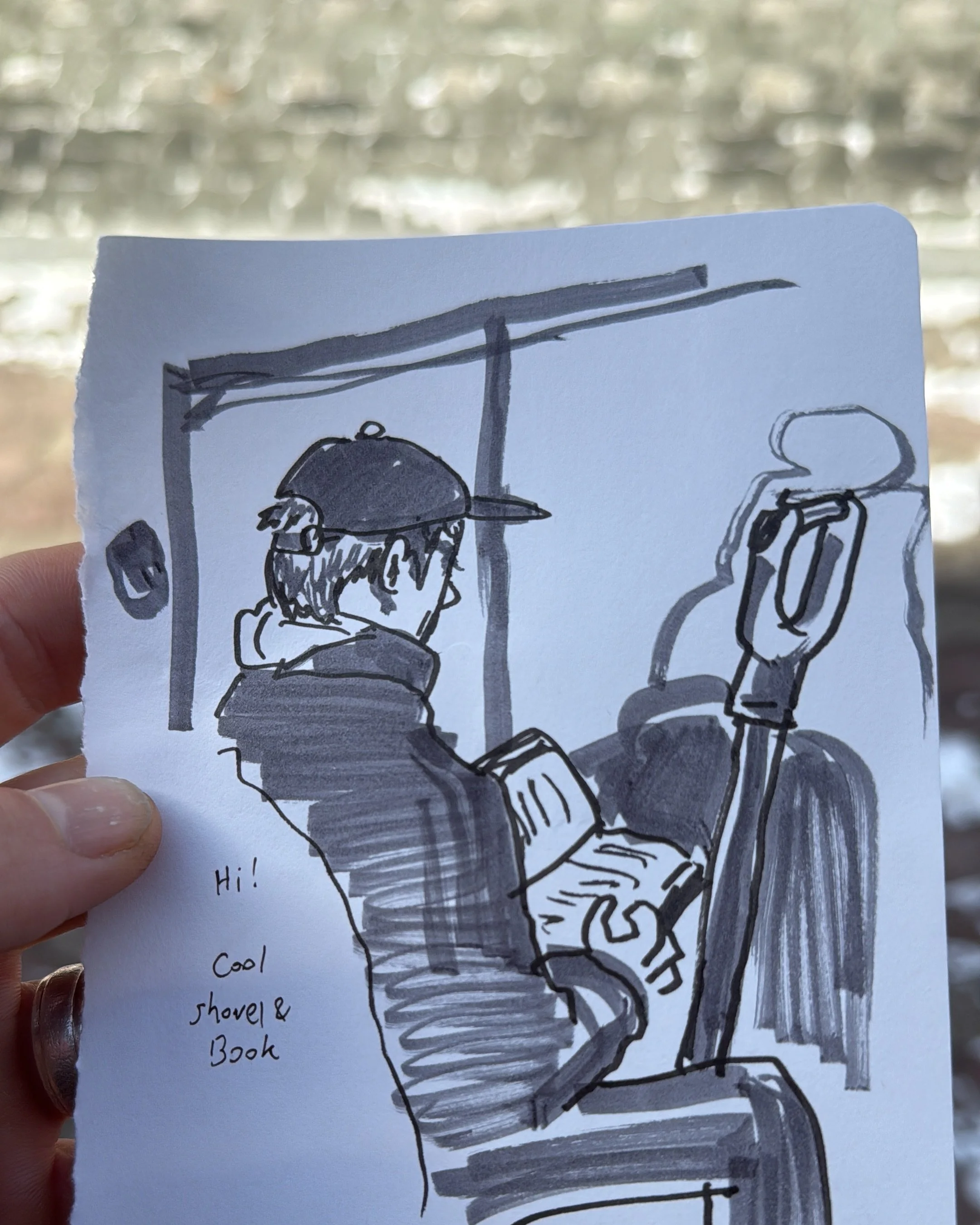
After finishing the morning private lessons, I had lunch and took the bus to the second location, about 40 minutes away. I used the ride to keep reading. Just before getting off at my stop, a young woman gently took my arm and handed me a handmade drawing. She had sketched me on the bus: me reading, with my “friend” the shovel beside me. Next to it she wrote only: “Cool shovel and book”.
When I reached the second field I saw there actually was snow. But the father of one of my students had already cleared the entire area we would use. Once again, at first glance the shovel seemed unnecessary.
Yet that shovel had not been carried in vain.
Even without knowing it, it had served as inspiration for someone else. That girl on the bus saw me, observed me during the ride, and decided to draw me. She didn’t know me, but something about that image —a guy reading with a shovel on a freezing bus— struck her as worth capturing. And that drawing ended up in my hands.
That day I had brought the shovel with me purely on instinct. And I didn’t really understand why until that moment.
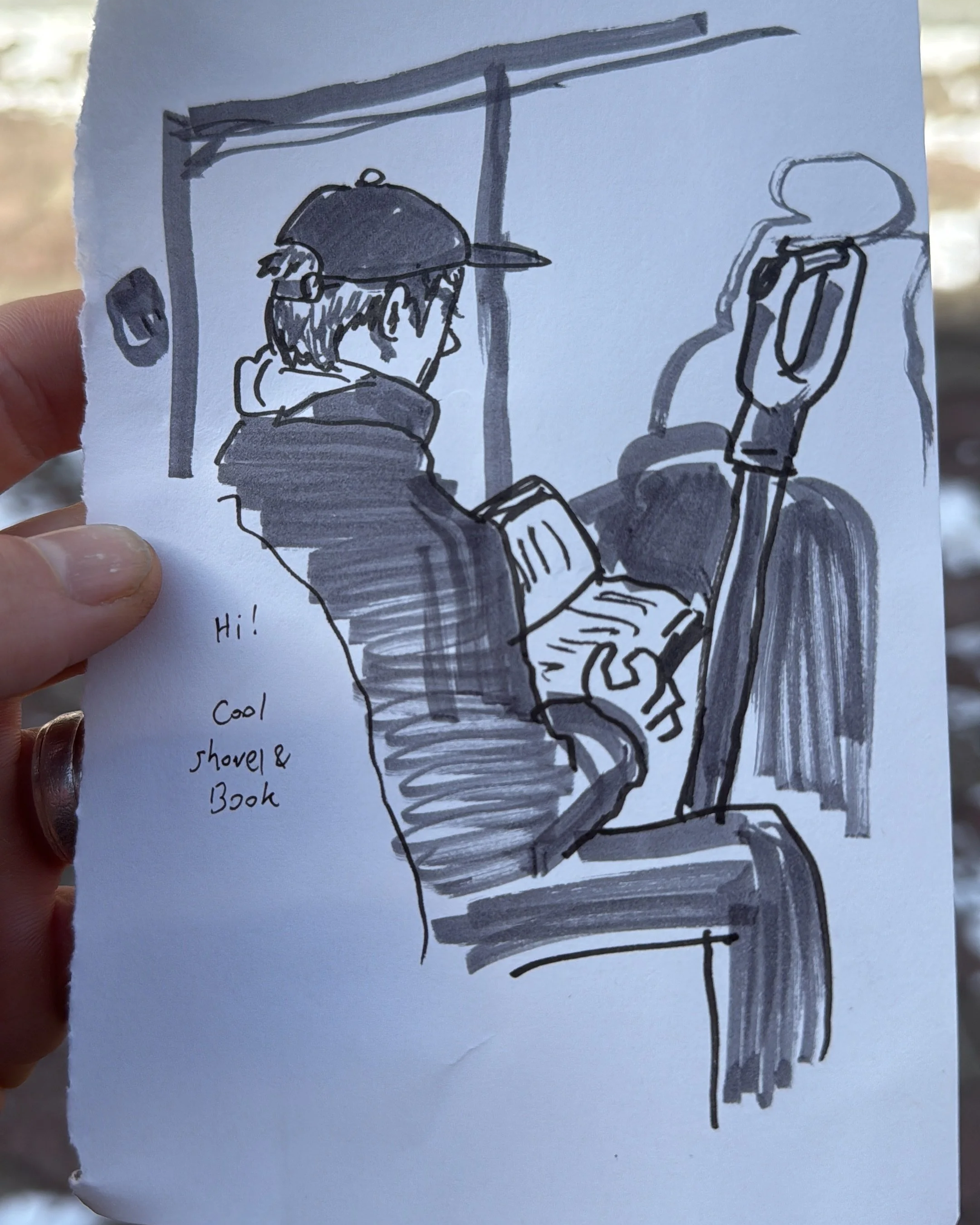
Drawing from an unknown friend. I'll call it: "Cool shovel and book"
There is a great deal of information in potential waiting to be revealed.
What some mystical schools assert begins to make practical sense: it is through intuition that we can access information from the future. Because, in a higher order of reality —where the space-time limitations we perceive do not exist—, past, present, and future occur simultaneously.
Intuition is not blind magic. It is an antenna that picks up signals from that greater order. Sometimes the signal is subtle (carrying an unnecessary shovel), other times more obvious (accepting a piece of paper handed to you by a stranger on the bus and later realizing it is a drawing of you being yourself).
In this particular case, the information “bring the shovel” only made sense once I received the drawing. Until then it seemed like a failed action on my part. This is one of the great paradoxes of this dimensional plane: temporal limitations lead us to believe we see the full reality and we judge events as good or bad with incomplete information.
It is like watching only one scene of a movie and deciding it is bad. Later, when you watch the whole film, you understand that scene was crucial to the outcome.
“Every good hidden in the occult carries the germ of evil; every evil hidden in the occult carries the germ of good.”
We must be conscious of this. An event we judge as good could turn out to be bad “chapters later” in our story, and the reverse is also true.
But if I understand that everything can be learned from, I am probably more willing to receive the information from events, knowing that my perception is always limited. In a higher plane, where past, present, and future are contained simultaneously, everything that happens must happen. There are no coincidences.
Or rather: we call coincidences those events we do not yet fully understand, and which we may understand later.
Intuition, like the body or the mind, can also be trained. It is very simple: spend time with yourself, trying to listen beyond the thoughts racing through your head. Many people tend to believe they are their thoughts, but no: we are what observes those thoughts. And that consciousness is always present.
That consciousness is the link to the future, because whoever is truly present simply knows what to do. It is that simple.
Presence can inspire others. In fact, your presence is always inspiring someone, whether you are aware of it or not. That is why it is necessary to work on fundamental questions: What do I want to inspire? And once that is clear, act accordingly.
If we try to show what we are not, ultimately we deceive ourselves first, because although we appear divided by form, we are all one.
“The end of the matter is that the hidden be seen.”
The hidden that exists within one has the purpose of being revealed.
It depends on us to carry out this work of revelation, so we can offer what is unique and what only we have brought to this plane. Each individual carries a unique fragment of the unity mentioned earlier (our ancestors knew this as Monad).
That unknown woman captured a flash of revelation of my soul: in the drawing I see the embodiment of my words, every opportune moment for learning. I am on the path to the revelation of what is hidden within me.
For this, one must work on oneself and above all keep in mind that the work is always from the inside out, never the other way around.
The tree is in the seed.
The statue is in the stone.
The most complete and finished version of yourself is already inside you.
We only need to create the necessary conditions so that what is potential in the hidden can be revealed.
Sometimes failing a pass, losing a match, being rejected by one or more teams, may hide valuable information so that you can refine your qualities and eventually arrive at a more complete version of yourself.
Your intuition, known to some as the “inner voice,” is speaking to you. If you can manage, even for an instant, to silence all the noise in your mind, perhaps you can hear yourself; perhaps in that instant you can begin to truly live, because:
“Being alive and living are not the same.”
And you, dear reader? When was the last time you followed your intuition even though, in the moment, it seemed “pointless”? What has been revealed to you afterward?

What you are is what you have been yesterday; what you will be is what you are being today
This phrase struck me deeply the first time I read it. Since then, I carry it as a constant reminder: within us there is an enormous margin of action to shape our future.
This phrase struck me deeply the first time I read it. Since then, I carry it as a constant reminder: within us there is an enormous margin of action to shape our future.
Paradoxically, to take a different path, we must first know the past and the road we have traveled until today. Without awareness of who we have been, it is almost impossible to understand who we are now. And without that understanding, very likely tomorrow we will be exactly the same as yesterday.
Without these realizations, change tends to be reactive: circumstances shape us instead of us shaping circumstances. And in some cases, we can easily fall into the role of victim—comfortable, moreover, because it brings attention from others—and become slaves to the external.
What is interesting is to take real dimensions of what “our past” truly means.
I will describe below layers of depth that go from the most superficial to the most profound.
First layer: habits.
Many of the ones we have today were forged by repeated behaviors (often unconscious) over years. The longer that period, the stronger the resistance to change.
Second layer: family and contextual influence.
Many behaviors were heavily shaped by parents, caregivers or environment in the early years. It seems there is much we did not choose and that simply conditioned us. But in a deeper order—according to many initiatory traditions—this was chosen by us before incarnating in this physical plane, with purposes of experience and learning.
Third layer: lineages and genetics.
Knowing the past also means looking upward in the family tree: grandparents, great-grandparents… The genetic load transmitted generation after generation is within us, as if they were the famous “default functions” of a mobile phone. Many of them activate or deactivate depending on external stimuli (this is known as epigenetics*).
We must know all this to understand that the past is a determining factor… only until we become conscious of the power that resides within us. Day by day. Tomorrow will be the same as yesterday if I do nothing different today. But if I modify my actions now, in this instant, I begin to create a new frequency that, if it gains enough strength, will become my new “default” state of being.
Once we have taken the reins of these layers of the past, we are ready to thread more finely: to reveal the hidden tasks that our ancestors left us to resolve. Perhaps that is why lineages had (and still have) so much importance. Knowing who you are, where you come from, what blood runs through your veins, gives you much more information about what you have come to manifest in this incarnation.
By the way, according to Buddhism, it is ignorance that brings us suffering and keeps us trapped in the wheel of samsara*.
So, where to begin?
I believe the most powerful question is not “Who am I?” (which can take us entire lifetimes to resolve. Note well that here I speak of lifetimes, with an s at the end). A more accessible one to start with is: Who do I want to be? Without limitations from our current state. Without filters.
This question opens the imagination, gives space to our genuine desire and provides direction.
Once we know who we want to be, it becomes much easier to align today with actions that put us in that direction. A dividing line is created that “parts the waters,” clearly showing us “good and evil” in our particular path; where good is everything that brings me closer to who I want to be, and evil everything that takes me away from it. And it is in that journey that we truly discover who we are. The final destination is only the excuse to reveal the path.
“Who I want to be” draws a clear line between what brings me closer and what takes me away.
Past and future are only references. Like climbing a mountain: sometimes we look up to see how much is left; other times down to see how much we have climbed. But the true intention must be in the present, in the steps we take now, in who we are being today.
It is in the act of reflection—of “stopping the ball”—that many times we can open the way to better decisions, as long as they are aligned with our genuine interest.
Let us not forget that there is no other human being exactly like us. Each one carries something unique. Discovering that can open the doors to a life full of purpose and meaning.
Past and future unite in the present. The past no longer is. The future is not yet. We live in the eternal now.
Clinging to the past is illusorily believing in the permanence of things. Sometimes we punish ourselves for what happened, other times we glorify ourselves, but what happened no longer exists, it no longer is.
The only thing that matters is what you are being today. And so in every instant.
It is today where every change begins. It is today that always gives us a new opportunity to be.
Our past brought us here and for that we must be grateful.
But in a higher order of reality—beyond the space-time limitations we perceive—past, present and future occur simultaneously. Everything is already contained in this eternal instant.
And beyond the character we play in this play, there is something that observes. Something that simply witnesses. Something that is not born nor dies with the body.
It is today where everything begins anew. It is today that invites us to be.
And you, dear reader, who are you? Who do you want to be?
Footnotes:
*Epigenetics: the study of how environmental factors can turn genes on or off without changing the DNA sequence. What we inherit is not a fixed destiny, but a starting point that responds to environment and our choices.
*Wheel of samsara: in Buddhism, the endless cycle of birth, death and rebirth driven by ignorance, attachment and aversion.

There is no success or failure, only constant learning
Today I want to share with you, dear reader, one of the deepest realizations I have had in this incarnation.
There is no success or failure. Only constant learning.
This dimension we live in —the human experience— is governed by relentless dualities: love-hate, white-black, light-darkness. And our current way of life seems completely ruled by the most visible pole: success-failure. An endless race where everything is measured by fixed results in time. If you arrive, you triumph. If not, you fail. A beautiful trap of this space-time dimension.
Today I want to share with you, dear reader, one of the deepest realizations I have had in this incarnation.
There is no success or failure. Only constant learning.
This dimension we live in —the human experience— is governed by relentless dualities: love-hate, white-black, light-darkness. And our current way of life seems completely ruled by the most visible pole: success-failure. An endless race where everything is measured by fixed results in time. If you arrive, you triumph. If not, you fail. A beautiful trap of this space-time dimension.
For much of my life, especially when I was a professional footballer, I lived enslaved by that law. A constant emotional rollercoaster: a good match made me successful; a bad weekend, a total failure. My value, my self-esteem, depended on external causes. Without realizing it, I was a prisoner of circumstances. And where there is external dependence, there is deep suffering.
In some book I read that there are two paths to understanding: experience and knowledge.
Through experience, one develops as a being —one is to the same extent that one lives a situation.
Through knowledge (study, observation of others), one avoids unnecessary pain and clears the path.
Here another duality seems to arise: experience vs. knowledge.
But the true task is to find unity between both poles. The bridge.
One must be and know at the same time to truly understand.
This does not happen overnight. It requires repeated and conscious efforts over time until forging the necessary vibrational frequency to comprehend.
In my stage as a player I was immersed in pure experience, with very little development of knowledge. In youth one believes they know everything, wants to do things “their way.” Divine sin of the ego.
That ego brought me to this very moment, but along the way —through pure ignorance— I suffered greatly and, what hurts more, I made others suffer.
Of course, experience also brought me very pleasant moments.
When I decided to move to South Korea with who was then my girlfriend and today is my wife, I stopped playing professionally. Instead, I began teaching as a coach. That’s where the real change began: acquiring knowledge, seeing all my blind spots, integrating past experience with new understanding. Reaching unity. Reaching understanding.
It is important to clarify: understanding is not a permanent state. It is a continuous flow. When you believe you have reached it, it immediately moves away toward a new horizon.
To believe that one possesses absolute truth or complete understanding is arrogance. And arrogance closes every possibility of continuing to learn.
Upon recognizing what I was previously unable to see, I understood something essential: the root of all suffering is ignorance. That ignorance always places us on one pole of duality, fragments us and makes us believe that the fragment we are in is the only existing truth.
Most of the time we live in that ignorance: believing ourselves successful or failures, creating conditionings that dictate our life, ignoring that everything is a continuous flow and that in this plane of consciousness,
the only thing that is permanent is impermanence.
So, how can we measure success and failure? Based on what?
If today’s success can be tomorrow’s failure and the other way around…
When I lose I learn. When I win I learn.
When things don’t go as I expect, it is an opportunity to seek a solution. When things go as I expect, it is an opportunity to remain vigilant and stay on the path.
To be attentive and relaxed at the same time.
Attentive to see the opportunities life brings to my door for learning.
Relaxed with the certainty that everything is arranged for my learning.
One sets the rhythm. And although the time to learn is eternal, we should work with our knowledge as if this were the only life we have.
Leaving duality. Rising toward unity.
We have incarnated in one of the most decisive moments of humanity. All our actions count. No matter how small they seem.
It is time to “ask for the ball at our feet,” to assume responsibility in this key moment of the match and to work on ourselves.
Without my contribution, without your contribution, without our contribution, humanity might not reach the critical mass needed to elevate its collective consciousness.
Everything you do counts…
My dear friend, there is no success or failure.
Only constant learning.
And you? Where are you today “asking for the ball at your feet”? Where are you “hiding behind the defender”?
LEARNING TO FEEL IT: A TRUE WAY TO TEACH
For years I’ve taught football. But what I’ve really been teaching — and learning — is how to feel.
It’s happened to me hundreds of times: a student shows up wanting to master a dribble, a pass, or a shot. I demonstrate the technique, but the real breakthrough comes when we manage to get them to feel the ball as an extension of their own body — when the movement stops being mechanical and becomes living expression. In that moment, football ceases to be just a sport and turns into a way of being in the world.
For years I’ve taught football. But what I’ve really been teaching — and learning — is how to feel.
It’s happened to me hundreds of times: a student shows up wanting to master a dribble, a pass, or a shot. I demonstrate the technique, but the real breakthrough comes when we manage to get them to feel the ball as an extension of their own body — when the movement stops being mechanical and becomes living expression. In that moment, football ceases to be just a sport and turns into a way of being in the world.
That’s when I discovered something that goes far beyond the pitch: to teach someone to feel something, I first have to feel it myself with full intensity. And to feel it more deeply — with greater color, volume, dimension — there is no other path than plunging completely into the experience.
The value we draw from any experience is directly proportional to the commitment we put into it. If we don’t give, we create no space to receive. It works like a perfect exchange: we receive in exact proportion to the value we offer others.
This creates a virtuous circle that allows no shortcuts:
We learn to the same degree that we teach.
We teach to the same degree that we learn.
And we can only teach what we already feel vividly.
How could I teach someone to control the ball softly if I’ve never felt it glide under my sole like a caress? How could I transmit calm under pressure if I’ve never inhabited that calm in the midst of a match’s chaos?
To truly feel something, you have to be it.
And to learn to be it, you have to give yourself permission to be it now, in this very instant. Not tomorrow, not when you feel “ready.” Today.
When we manage to embody within ourselves — even if only in an incipient way — that which we long to become, something magical happens: we automatically begin to teach that state to others. Not with words, but with presence.
In short: we teach by being the example.
This has been the most powerful lesson football has given me, and now I want to share it beyond the ball itself. Because all of us, in some area of our lives, are learning and teaching at the same time.
I invite you today to choose just one thing you want to feel more intensely (a movement, an emotion, a way of relating) and give yourself permission to be it while you practice it. You’ll see how, almost without realizing it, you’ll start teaching it to those around you.
What are you learning to feel in this moment of your life?