Time to Be Coherent with Simplicity
This phrase "came down" to my mind one afternoon, while I was reflecting on life's cycles — my own in particular. I understand these cycles as chapters that mark our history, each one with its own duration according to the relativity of each particular life. And over time I have become more able to recognize the passages: those periods of migration from one cycle to another, where one crosses a bridge and decides what to carry along and what to leave behind.
I am in one of those crossings now. That is why I find myself making these reflections.
The clarity didn't arrive until just after the World Cup final, where Argentina lost to Spain.
I watched the match at home, with an Argentine friend. And something curious happened to me: although my heart wanted Argentina to win — I was born and raised there, even though Spanish blood also runs through my veins —, during the match I felt more like a spectator than a supporter. I was simply watching an interesting, entertaining match. I was present, without the weight or the tension of needing the team you cheer for to win no matter what.
What made a very strong impression on me came afterward. After the defeat, some players became aggressive. And that image was very hard to watch — not because of them, but because I automatically recognized myself. That contained rage, that way of channeling through football an energy that is fundamentally misplaced but well justified by "passion": that is also mine. I saw myself reflected in the player who caused the disturbances.
Throughout my career, I reacted many times in a controversial or aggressive way, justifying it as "part of living the game." It's passion, I told myself. And inside that word — passion — one hides and even reinforces behaviors one knows are wrong, shielding them with the idea that others, lacking passion, "can't understand it."
But reflecting, when I went to the root, I did not find passion. I found suffering. A suffering lived through the sport, still latent there — a part of me that has not yet had the opportunity to evolve.
And there the contradiction appeared, painful: when I coach my students, I preach that football is only a game, that first you have to enjoy yourself in order to be. I saw the distance between what I teach and what I had been embodying when I take on the role of player. I didn't like it, but I had already seen it — and seeing one's own "miseries" is something that, perhaps out of an instinct to flee from pain, tends to activate certain "evasion mechanisms."
What I am looking for in this new crossing is precisely this: to sacrifice the suffering. That when I play, the game stops being suffering. That it stops being everything I picked up from elsewhere and returns to being simply a game. Resignifying the meaning, rewriting the code of the word game within my practical software (integrating the meaning that is already present in the theoretical part, as it also is in so many other aspects of the "game of life"). And for that, I understand it is necessary to release identification, because if one does not identify with something, one cannot suffer through it.
It was then that the phrase came to my mind: it is time to be coherent with simplicity.
Simplicity and coherence are closely related. To be simple, what one says, does, feels and thinks must be in congruence, without contradictions. It is simplifying the equation. Solving for x. Dissolving, letting go of everything that is left over.
And what I understand is left over now, in my case, is a construct: almost an inherited mandate for being "Argentine" — the garra, playing hard, suffering as a way of loving the game. Predetermined concepts and ideas that gradually impregnated and mixed themselves with my identity and with my way of understanding the game. The recurring question that comes to me is how much of this I truly feel that way, and how much is "inherited." And although I am still trying to answer that question, I felt a deep clarity: I must become simpler, lighter, less burdened… there is weight that is left over. And behind that clarity, another somewhat uncomfortable question arose: at what moment did I decide to complicate things so much?
I believe a part of me complicated things excessively because, deep down, the simple seemed ordinary to me. Of little value. As if something simple could not be worthy of recognition — and there was the real knot: the desire to be recognized.
The ego does not fear failure as much as it fears the simple. Because in the simple there is no one and nothing special to applaud. Complexity provides a place to shine; simplicity asks you to disappear into the game, into the instant, into what is. And for the character we construct, disappearing feels like dying. At least that is how I had understood it until now.
And yet — here is the paradox — it is in simplicity that one truly is. And when one is, without more, one reveals precisely that which makes one unique. To be oneself, to be simple, is what costs the most.
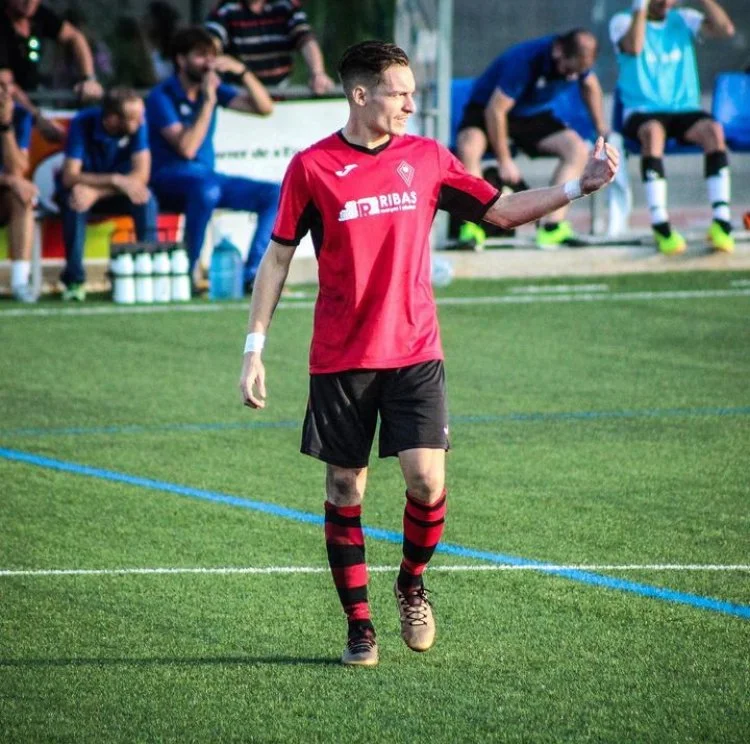
"that part of me which today is shedding everything it doesn't need, so as to return to the simplicity of being who it really is"
Perhaps the problem appears when we take as our own constructs that do not belong to us, covering over our simplicity — our rarity —, altering our essence, diluting its purity. And there is much that gets "impregnated" in us during our "formative stage," which will later condition a great part of all our experiences; at least until we are given the grace to resignify ourselves, creating a "purer" version of who we are. If there is no conscious effort and no work upon oneself, this will not be possible.
Thanks to all this I can now see where to step in order to take one small step further toward "freedom."
To become one is to become simple. And in that simplicity the "combat directed outward" is dismantled: there is no one to fight against, no one to demonstrate or prove anything to — deep down there never was.
So right now, this piece of writing turns into a declaration of principles: I no longer want to fight, but rather to enjoy the experience of being alive; and with that, to open myself to everything that lies beyond the fight, which in my case, until today, was a fight for approval.
I no longer want to wait for recognition in order to be, but rather to simply be, independently of external recognition.
I won't lie to you by saying I already know what this looks like in practice. I am in the middle of the crossing, one foot on each shore. I still have no method, no list of steps. I only have the direction: to become simple, even though becoming simple is not easy at all. I suspect it is trained like everything else — in the small things, in how I react to the events that arise in my day to day, to the next bad match I play, in whether I am capable of playing without needing to prove anything to anyone. I'll tell you what I found there, once I reach the other shore.
What I do know is that in order to change what will happen tomorrow, we have to begin by changing what happens today. Therefore, carrying out this task I have assigned myself requires beginning today, right now.
Also, what I do know is where all of this is pointing. Because at some point along the way I tuned in to a different frequency, one in which everything is as it is, and everything unfolds as it unfolds. A frequency in which there are no errors, because everything is as it has to be.
In that frequency, nothing goes wrong; and I intuit that in order to tune in to that frequency one must become simple, being what one really is, letting go of what one is not. Even what one is not has a function, and that is to remind us of what we are: through what I am not, I can also come closer to what I am.
Just as facets of myself that no longer represent me were revealed to me today in one concrete area, I understand that everything is connected and that this goes beyond football itself. Being able to look at oneself objectively requires effort and courage. Nor are there permanent states, since everything is in constant flow and one is no exception. Staying in the "correct" vibrational frequency requires efforts and also "voluntary sacrifices." The first sacrifice is one's own suffering and, as I wrote before, for that one must stop identifying — knowing that when this happens and is sustained over time, something is going to "die." Perhaps to "reborn" is to resignify our life, inhabiting a much more complete and finished version of ourselves.
They say that in order to be born one must first die, and that in order to die one must first awaken. Perhaps what happened that afternoon, watching those players on the screen, was just that: an instant of awakening. I hope that from this event onward, the identification with what I no longer am dies in me today, giving way to the birth of a more real and permanent individuality. Because life is only real when one is.
And you? What construct are you carrying that isn't yours? What would you have to let go of in order to cross over, lighter, toward who you want to be? Are you willing to pay the price of seeing your own contradictions — and more still, the price of doing something about it?
