We Are Not What We Eat, but What We Assimilate
We are not what we eat, but what we assimilate. I heard this phrase last week and, in an instant, it encrypted within itself a whole accumulation of emotions, experiences and thoughts I had been having lately. In fact, the reflection that had been circling in my mind was literally this: of everything that enters us, how much do we truly absorb? And with this question I wasn't thinking only of ordinary food, but also of food of a more subtle order.
We live in an age where "scientism" has become the new religion, and this often makes us dismiss everything that cannot be measured, quantified or replicated. We tend to fall into the dogma of "this isn't scientifically proven," to the point of denying the experience of other people and, in some cases, even our own. Because there are many phenomena that, although not replicable, are real: phenomena of individual experience, in which the individual is precisely unique. Waiting for science to confirm what is often an intuition can set us back, on average, fifty years. Perhaps I'll speak about this in detail in a future blog.
Almost liturgically, we count calories, hours of study, hours of training. And don't misunderstand me: doing so isn't wrong —putting in the hours is necessary—. But I believe that way of measuring has become very superficial. Because it places all the attention on what enters, and none on what happens inside us, on what we can actually assimilate from all that input.
In football, for example, a player can train for two hours in a typical session. And yet, often out of those two hours he assimilates barely fifteen minutes. The rest passes him by: the body was present, but assimilation didn't occur. So, from that training, did he integrate two hours or fifteen minutes? The paradox is such that often, in order to distill those fifteen minutes, one must prepare a two-hour session. Just as the level of one's being determines the level of understanding, the same happens with the assimilation of everything that enters us.
We are not necessarily what we eat, but rather we are what we assimilate.
And once you look at life through this lens, the law of "finding unity in diversity" makes the examples begin to reveal themselves in everyday events that, at first glance, bear no relation to one another. Because it turns out we don't feed on one thing alone.
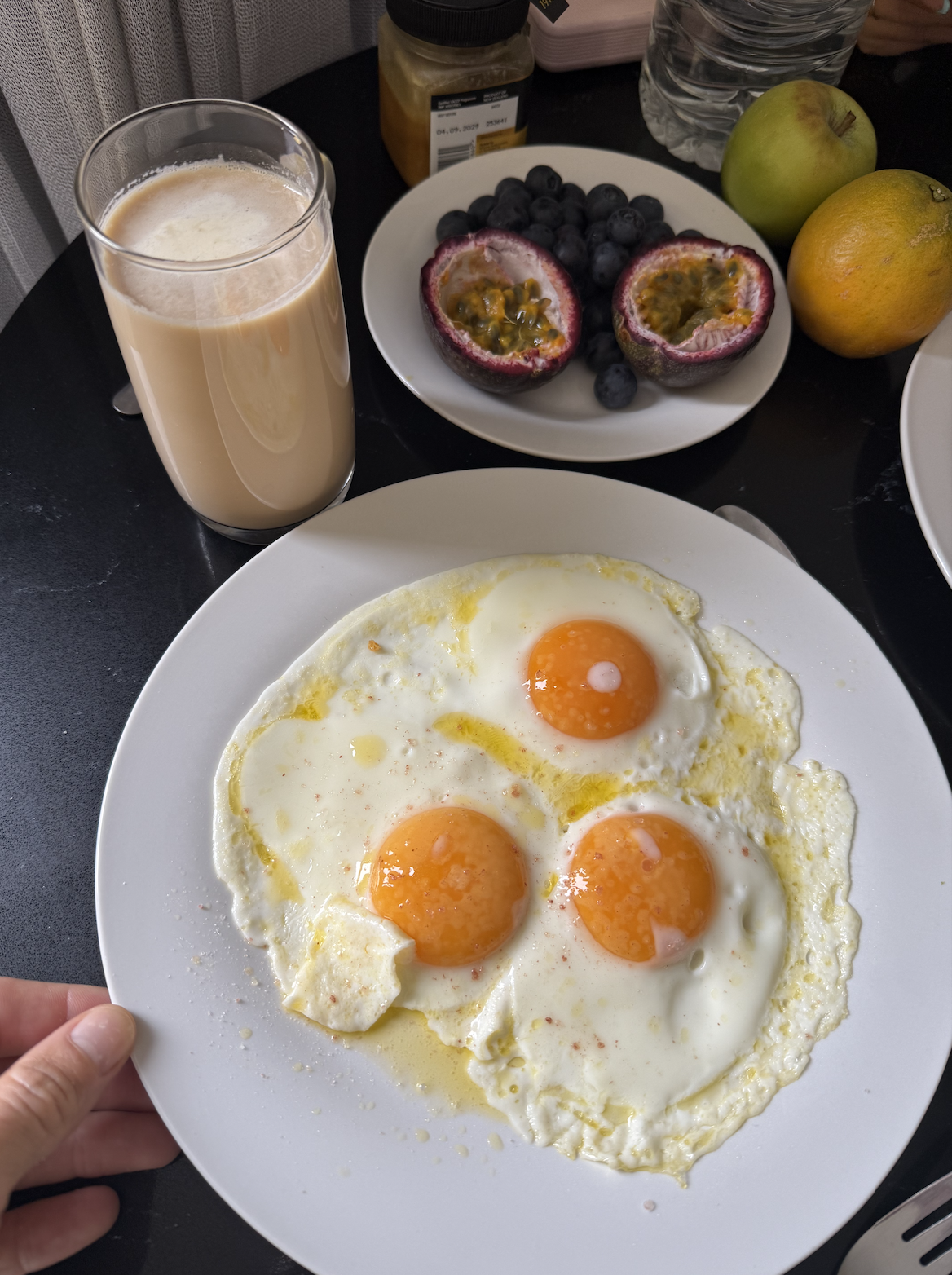
“The building material matters as much as the quality of the workers' labor”.
Three foods
There is an ancient teaching that always struck me as fascinating: the human being is nourished by three distinct foods, each more subtle than the last.
The first is food. The densest, the most obvious. Without it we can live for weeks.
The second is air. More subtle, and far more urgent: without it we last barely minutes.
The third —and here is where it gets interesting— are impressions. Everything that enters through the senses: what we see, what we hear, what we perceive of the world and of the people around us. It is the most subtle of the three foods. And also the most neglected, because we receive it completely automatically, without realizing that it is feeding us —or poisoning us— at every instant. Without it, we cannot live even a second.
With all three, the same holds as with food: they don't nourish by the mere fact of entering. They nourish according to how we digest them.
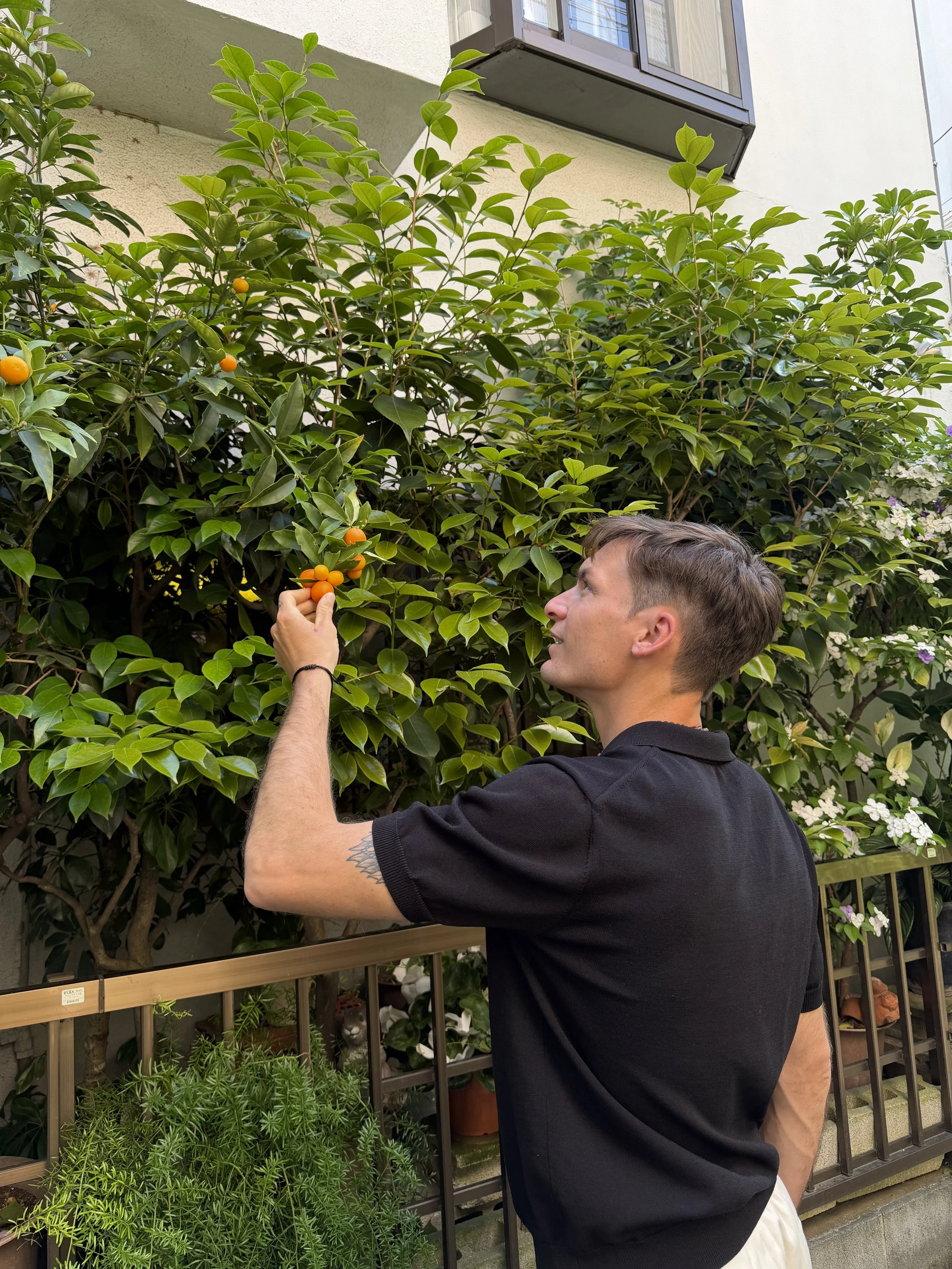
A tree I came across in the middle of Tokyo. The impression I felt was the force of life manifesting itself through its fruits.
Back to the first food
Let's return for a moment to food, because I learned this one in my own flesh. For a time I believed it was enough to eat well —the right ingredients, the right quality—. But the body can receive good food and still not assimilate it, if the conditions aren't there: if one eats in a rush, in tension, without rest, without the right frequency. Real nutrition is not what enters through the mouth. It is what the body manages to transform into living matter. By this I don't mean you shouldn't nourish yourself with real food: the building material matters as much as the quality of the workers' labor.
If this is true for the densest, imagine for the most subtle.
Impressions: the invisible food
Here I want us to pause, because this is the most important point, and the one that tends to escape the untrained eye.
We are receiving impressions all the time. A conversation, a screen, a gesture, a landscape, someone else's emotion. At first they enter without permission and in enormous quantities. And because they enter on their own, we believe they require nothing of us. There lies the error. Under unconsciousness —that famous "airplane mode" we often slip into, especially in adult life, and out of which it is truly difficult to climb once one becomes aware of it— most of those impressions are simply lost. Or worse: they pile up undigested.
Children are the clearest example. They receive impressions with a force we have already lost —which doesn't mean we can't recover it; work upon oneself is also a kind of training and, as such, requires conscious efforts on our part—. They receive them that way mainly because their personality has not yet become flesh, or is in its early stages of gestation, which means they possess fewer filters; and because they have little time of life, which amounts to little time of experiences that would allow them to discern, compare, evaluate. That's why almost all the negative emotions one sees in a child are not their own: they are learned through imitation. A great part of negative emotions are, at bottom, acquired (on this last point, dear reader, it will be good for you to reflect on your own).
They absorbed an impression and made it flesh, without knowing it. As adults, parents and educators, this should give us pause: what we emit in front of a child becomes their food. Regardless of what we say, if we don't embody our own words, it is very likely our influence will be poor and weak. One must become coherence, for these small beings are great detectors of coherence and incoherence (and, having said this, note that from children we can learn, and learn a great deal).
There are also impressions we never manage to digest. They stay stuck. On a subtle level at first; and if one doesn't listen to oneself, that energy begins to materialize until it expresses itself in the body. Because the body is always speaking to us.
Here I speak from my own experience: in a myofascial release session, as the physical tension in my legs let go, memories began to surface —matches, rejections, old pains; I even came to feel like crying. Those —as I interpret it today— were impressions that at the time I couldn't assimilate or release, and that the body had stored in the form of pain, waiting patiently for me to look at them.
That's why I believe the symptom is not something to switch off. It is a call to look at oneself. The pain that asks for attention is not an enemy: it is an undigested impression that asks, at last, to be assimilated and released. If one does not listen to the voice of the soul, in many cases the soul sickens the body and takes it out of the flesh (this is as far as I am allowed to reveal).
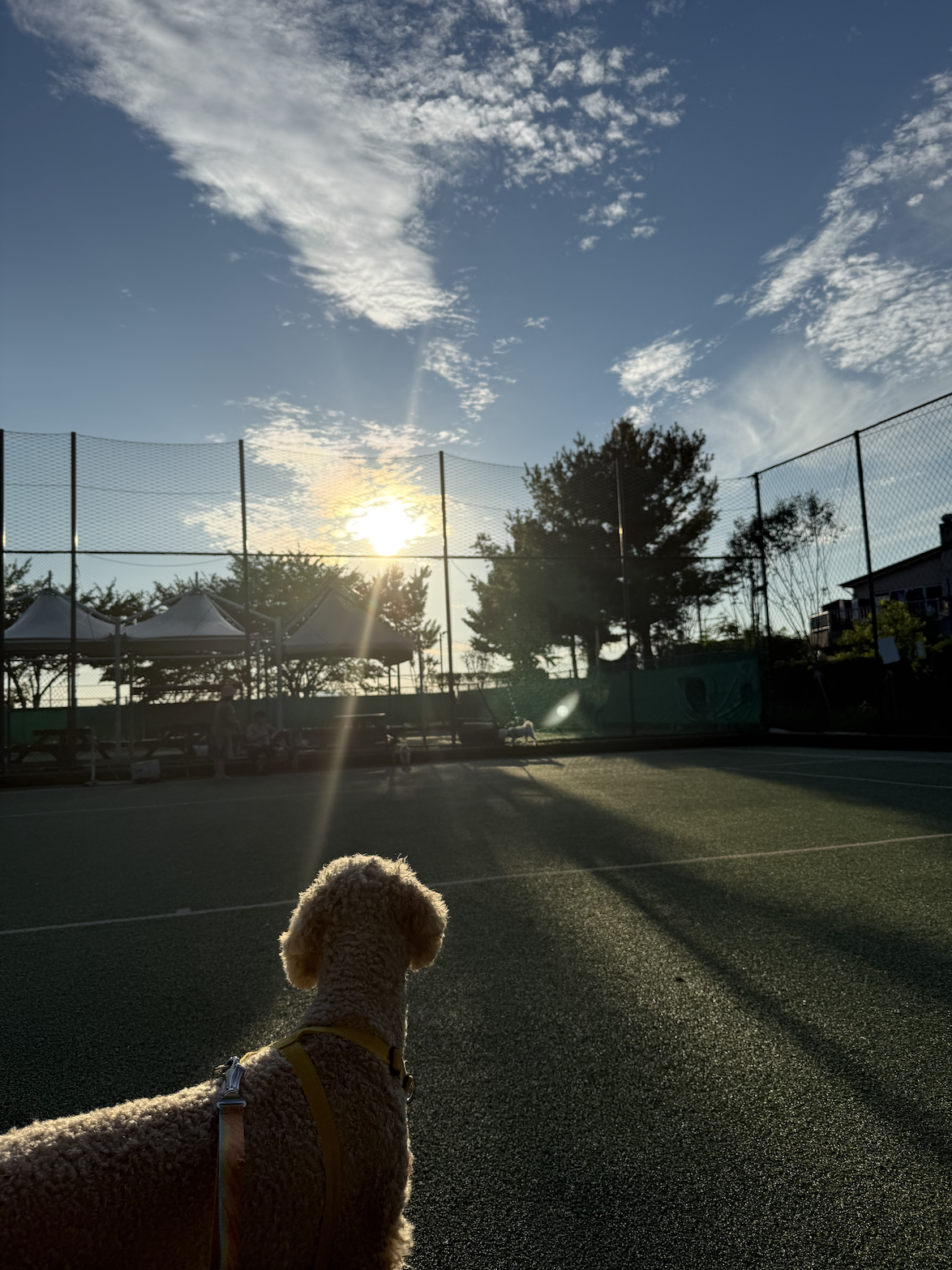
I leave it to you, dear reader, to interpret the impression I received in this moment.
To train is to digest
Here the circle closes with football, and with life.
To train is not to accumulate. To train is to digest. The value is not in the amount of tactical information a player receives, but in what he manages to transform into body, into gesture, into decision under pressure. And this digestion is often slow, subject to the law of processes: it's about beginning to assimilate little by little so that, in time, one becomes able to accumulate nutrients of an ever higher level, and also to assimilate greater quantities. An ever more subtle assimilation.
The same with life. It's not about how much you read, how much you see, how much you live. It's about how much one manages to assimilate and integrate so that transformation may occur; so that the alchemy of oneself may transform ordinary metal into gold.
The price of assimilating
And how does one assimilate consciously? Here I connect with something I shared in the previous blog: by becoming simpler. As simple as one can be, and as necessary; no more than that. Reducing the noise. Training with small quantities to strengthen ourselves and be able to receive ever more material for absorption. The overload of impressions —the bombardment of screens, stimuli, information— is precisely what prevents assimilation. Simplifying life is not renouncing: it is creating the conditions for what enters to nourish us, for food to become nourishment.
But this has a price, and it isn't me who says so (so please, don't be upset with me). In the ancient teaching I mentioned earlier there is a very interesting idea that, in my case, accompanies me daily: to obtain what one sets out to achieve, one must pay in advance. And that payment consists of sacrificing everything that takes us away from the purpose. Moreover, there are no guarantees: no one assures us we will arrive.
Choosing what we feed on —in food, in air and, above all, in impressions— is perhaps one of the most important decisions we make each day. And for that one must become conscious of oneself, work upon oneself, so that when the moment comes one is able to do. Because, subject to the law of accident, in the illusion that we are doing, we fail to see that in reality things happen to us.
And you? Of everything that entered you today —what you ate, what you saw, what you felt—, how much did you truly assimilate? How much are you able to remember? How much passed you by because you were in "airplane mode"?

The gradient of colors in the sky, and the joy of having been able to perceive it, to receive it.
